Hidden Costs of Cheap Cleaning Services: What the Price Leaves Out
In this article
- Key Takeaways
- Table of Contents
- Cleaner training, consistency and insurance
- Damage caused by improper chemicals or cleaning methods
- Low hourly rates versus total cleaning value
- Unexpected charges and price increases
- Weekend, holiday, and transport surcharges
- Athena Team Cleaning: Office Cleaning
- Choose a Cleaning Plan That Fits Your Space
- Frequently Asked Questions
The lowest cleaning quote can end up costing more. The hidden costs of cheap cleaning services often come from inconsistent work, repeat cleans, damage risks, and extra charges that weren’t clear upfront. Training and insurance also affect how confidently you can rely on a service.
A low price is appealing when you need a clean, comfortable home or workplace without stretching your budget. But the quoted rate alone doesn’t tell you whether the work will be thorough, whether suitable methods will be used, or what happens if something goes wrong.
This article explains how training, insurance, cleaning quality, damage risks, and additional fees can affect the true cost of cleaning services in Singapore. You’ll also learn why a clear scope of work matters when comparing a low quote with the value you receive.
Key Takeaways
- Compare the full scope of work, not just the hourly rate, so you can see whether the quoted service covers the cleaning your space needs.
- Consistent schedules and well-trained cleaners can help prevent missed tasks, repeat work, and hygiene issues.
- Using the right cleaning product and method for each surface helps reduce the risk of damage to floors, furniture, and other assets.
- Factor possible transport, weekend, public-holiday, or last-minute surcharges into your budget before booking.
- Review contract terms, extra-work charges, and how damage is handled to understand the real value behind a low quote.
Cleaner training, consistency and insurance
Unusually cheap cleaners can leave surfaces dirty, damage belongings, or create security concerns, including theft. The risk is greater when rushed work, unfamiliar cleaning products, or unclear responsibility combine.
Training affects how cleaners handle different tasks, products, and surfaces. Glass, carpet, and timber each need different methods. Without that knowledge, a quick wipe can spread soil, leave residue, or expose a delicate finish to unsuitable products. In an office, for example, dusting first and using appropriate products on high-touch areas creates a more consistent routine than using one cloth throughout.
Consistency matters across each session, not just during the first visit. If the same tasks are skipped repeatedly, dirt and grime can accumulate and make a workspace less welcoming. A written task schedule can identify areas such as meeting tables, pantry counters, and shared touchpoints. Monthly management-led audits are one example of a review process that can help identify missed tasks and keep standards visible over time.
Insurance affects who may bear the cost if an accident occurs. A broken monitor, scratched surface, or damaged carpet can create an expense beyond the cleaning fee. Review the written policy for covered damage, exclusions, the claims process, and any limits. Coverage varies, so a general statement that a cleaner is insured doesn’t explain whether a particular incident is covered.
Background checks and clear access procedures also matter when cleaners enter a home or workplace. Consider how identities are verified, who receives keys or access codes, and how access is recorded. For example, a business can limit access to areas listed in the cleaning schedule and keep a record of key handovers. These steps support security without assuming every low-priced service creates a problem.
Compare more than the hourly rate. Look for relevant experience, a clear approach to training, a process for addressing missed tasks, and any service guarantee. A useful guarantee explains what happens after incomplete work, rather than relying on a broad promise. Check whether the schedule names priority areas and whether supplies are provided or expected from you.
- Match training to the work: carpet care calls for different handling than wiping a desk.
- Use a task list to make each session’s expected work clear.
- Read insurance terms for coverage, exclusions, limits, and claims steps.
- Clarify access controls and key handling before cleaners enter the premises.
- Compare how missed tasks are addressed, not just the quoted rate.
These safeguards help explain the hidden costs of cheap cleaning services: the concern is not price alone, but whether a low rate leaves training, accountability, or protection out of the arrangement.
Damage caused by improper chemicals or cleaning methods
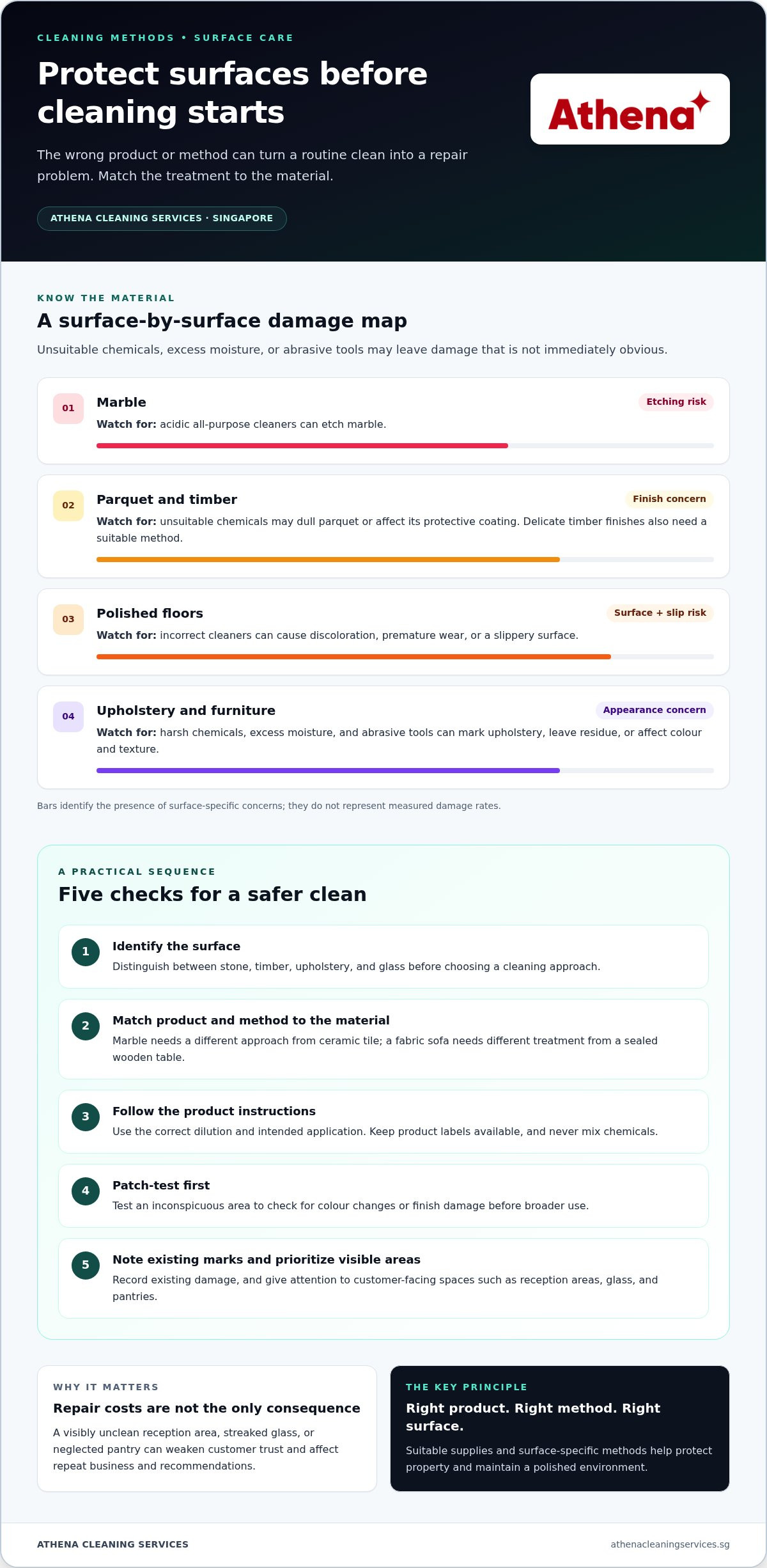
The wrong product can turn a routine clean into a repair problem. Acidic all-purpose cleaners can etch marble, while unsuitable chemicals on parquet may dull its finish or affect its protective coating. On polished floors, an incorrect cleaner can also cause discoloration, premature wear, or a slippery surface that raises the risk of slips and falls. The damage may not be obvious until light catches a patchy finish or the surface becomes harder to maintain.
Furniture can suffer, too. Harsh chemicals, excess moisture, or abrasive tools can mark upholstery, leave residue, or affect a fabric’s colour and texture. These examples show why saving on a cleaning session may not be worthwhile if a surface needs repair or replacement afterward.
Good cleaning means matching the product and method to the material. A cleaner should identify the surface, use the correct dilution, and follow the product’s intended application. Marble needs a different approach from ceramic tile, while a fabric sofa needs different treatment from a sealed wooden table. A small patch test in an inconspicuous area can reveal colour changes or finish damage before broader use.
There’s also a reputational cost for businesses. A visibly unclean reception area, streaked glass, or neglected pantry can weaken customer trust and affect repeat business and recommendations. In a Singapore office, a mark left on a meeting-room table may shape a visitor’s impression before a conversation begins. Prioritize consistent cleaning of customer-facing areas, then structure the task list around the surfaces and materials found there.
Suitable supplies and surface-specific methods help protect property and maintain a polished environment. Before work starts, identify delicate finishes, note existing damage, and make sure instructions distinguish between stone, timber, upholstery, and glass. Keep product labels available, follow the stated dilution, and never mix chemicals. These steps reduce preventable mistakes and make the standard of cleaning easier to assess.
- Match the product to the surface, especially for marble, parquet, and upholstery.
- Use the correct dilution and test an inconspicuous area first.
- Prioritize high-visibility areas that influence customer impressions.
- Record existing marks so new damage can be distinguished from old wear.
For stone or timber floors that need specialist care, marble and parquet floor polishing can help address surface maintenance with methods suited to those materials.
Low hourly rates versus total cleaning value
An advertised rate only makes sense alongside the booking rules and included work. In Singapore, the total depends on the pricing structure, cleaning duration, supplies, and any additional charges.
Comparing Cleaning Rate Structures
An hourly rate charges for time, a fixed price covers a defined scope, and a package groups agreed tasks or sessions. Independent part-time cleaner rates in Singapore are commonly presented by the hour, but the total still depends on booked hours and the work expected. Compare the initial quote with the actual task list, not just the headline rate. This helps you evaluate whether the arrangement fits your space and avoids assuming that different pricing formats cover identical work.
Hourly pricing can suit recurring tasks when the time and priorities are clear. Fixed pricing can make the amount easier to understand when the property and scope are defined. A package may bundle regular sessions, but its value depends on frequency, included tasks, and how extra work is charged. Ask how each option is calculated and whether supplies are included or provided by you. These details shape your upfront commitment and potential extra costs.
Minimum Bookings and Total Costs
A minimum booking sets the shortest session a customer can purchase, regardless of how quickly the listed tasks might be completed. Cleaning agencies in Singapore commonly require a minimum booking of 3 to 4 hours. That means a low hourly rate can still produce a higher total for a brief clean, especially if the required tasks fit into less time.
For a fair comparison, multiply the hourly rate by the minimum session, then note any charges for extra work. An advertised rate may cover labour only, while your needs may involve more rooms, supplies, or cleaning time. A provider’s final price depends on the premises, scope, frequency, and supplies, and is provided after a quote request. Compare the same task list and session length to understand the real difference.
GST and Quoted Prices
Quoted cleaning prices in Singapore aren’t always inclusive of GST. Some large cleaning agencies add 9% GST on top of their base rate, so check whether the displayed amount is the final total or a pre-tax figure.
Read the quote and invoice together: the base rate, GST treatment, minimum duration, and additional charges should be clear. For example, comparing a GST-inclusive total with a pre-tax hourly figure can make one option look cheaper than it is. Distinguish tax from service extras, then compare the final payable amount for the same scope. That’s more useful than looking at the initial rate alone.
Unexpected charges and price increases
A low advertised rate may not include every charge on the final bill. In Singapore, transport, compulsory extras, added work, and rate changes can reduce the savings you expected.
Hidden Fees and Extra Charges
Hidden fees are charges added beyond the advertised cleaning price, and they can make the final bill harder to compare. Some part-time maid services in Singapore add compulsory extras that increase the bill by 10% to 30%. A low base rate can therefore look attractive upfront while the total rises once those extras apply.
Added work can change the amount due. For example, requesting extra rooms or tasks outside the agreed scope may bring additional charges. A business may also face another expense if it hires a second company to correct poor service. Review the pricing structure and contract terms before committing, including how extra tasks and rate changes are handled.
Transport and Travel Costs
Transport charges are fees added to cover a cleaner’s journey to the premises, and they matter because location can affect the total. Cleaning providers in Singapore may charge more for locations farther from the central business hub.
For a recurring booking, a per-session fee can accumulate across visits and reduce the savings from a low hourly rate. Compare the full cost over the same number of sessions, rather than assessing transport as a one-off expense. Note whether the quote includes travel, and whether a location-based charge applies to each visit.
Price Increases
A price increase can disrupt a cleaning budget if the terms are unclear. Changes may follow a revised scope, added tasks, or updated rates. The key distinction is whether the increase reflects work you requested or a change to the original arrangement.
Read the contract to understand how changes are communicated and when revised charges take effect. If a regular session expands to include an extra area, for example, the additional work may affect the bill. Keep the original quote and later pricing notices together so you can compare the agreed scope with the new amount. Transparent pricing makes it easier to see what changed and why.
To compare offers fairly, write down the base rate, transport fee, compulsory extras, and charges for additional work. Then calculate the total for the same cleaning scope and booking frequency. This makes hidden fees easier to spot and shows whether an apparent saving remains once every charge is included.
Weekend, holiday, and transport surcharges
Cleaning costs can rise when a booking falls on a weekend, public holiday, or short-notice date. In Singapore, compare the surcharge terms alongside the base quote, especially when timing or location is fixed.
Weekend and public-holiday surcharges are extra charges for sessions scheduled on those days. Some weekend or last-minute bookings can instead carry surcharges of 20% to 50%. These are different pricing approaches, so don’t assume both apply or add them together without seeing the quote’s calculation.
Last-minute work can cost more because the provider has less time to arrange staff and schedules. Urgent bookings may incur a fee when made with less than 24-48 hours’ notice. Planning at least two weeks ahead can help avoid urgency surcharges. For example, if you need a clean before guests arrive, booking early gives you more control over the date and makes the quoted total easier to compare.
Transport charges may also depend on where the premises are located. Singapore providers may add a transport fee for locations farther from the central business hub. A transparent quote should show whether travel is charged per session or handled another way. For recurring cleaning, compare the transport terms across the full schedule, rather than looking only at the first visit.
Before accepting a quote, separate the base price from each possible surcharge. Consider whether the booking is on a weekend or public holiday, whether it is urgent, and whether travel charges apply. Then compare the final amount for the same date, premises, and cleaning scope. This protects your budget from a low advertised rate that changes once timing and travel are included.
- Compare percentage-based and fixed surcharges as separate pricing methods.
- Book at least two weeks ahead when your cleaning date is flexible.
- Note whether transport charges apply to each session.
- Confirm whether the cleaning supplies and vacuum are provided or expected from you.
A clear schedule can make it easier to plan around weekend and urgent-booking premiums. For help arranging cleaning for your space, discuss your cleaning schedule.
Last-minute cleaning bookings in Singapore may incur an urgency surcharge. Before confirming a late request, ask the provider to state whether that charge applies and include it in the total quote. This makes it easier to judge the complete cost against your budget before committing to the booking.
Athena Team Cleaning: Office Cleaning
Athena Team Cleaning provides Office Cleaning for businesses that need a consistently maintained workspace. Building Maintenance and Sanitization Services can support broader upkeep, while Carpet and Rug Cleaning addresses dirt in floor coverings. Choose the service that matches the work required, rather than paying for tasks your premises don’t need.
For offices, a clear cleaning scope helps align the schedule with priority areas such as shared workspaces and meeting rooms. Specialist carpet care can complement routine cleaning when vacuuming alone doesn’t address accumulated soil. Together, these services help create a cleaner, more welcoming environment for staff and visitors.
Contact Athena Team Cleaning to discuss your office cleaning needs and the scope of work for your premises.
Choose a Cleaning Plan That Fits Your Space
Base your decision on the result you need, not the lowest number on a quote. A concise brief describing the space, priority areas, and preferred schedule gives you a clearer basis for discussing the scope. It also helps keep expectations aligned as your cleaning needs change.
The hidden costs of cheap cleaning services are easier to avoid when the arrangement supports your standards and how your premises are used. For workplaces that need regular upkeep, Athena Team Cleaning offers Office Cleaning and Building Maintenance. Carpet and Rug Cleaning can address floor coverings that need focused care.
Choose the areas that matter most to staff and visitors, then consider which services suit those needs. A well-defined plan can help create a welcoming workspace and make ongoing maintenance easier to manage.
Contact Athena Team Cleaning to discuss cleaning for your premises. Take the next step toward a cleaner, more comfortable environment.
Frequently Asked Questions
What extra charges do Singapore cleaning services add for transport, supplies, weekends, or public holidays?
Possible extras include transport, cleaning supplies, and surcharges for weekend or public-holiday sessions. Some platforms also expect customers to provide a vacuum, mop, and cleaning solutions. Ask for an itemised total that clarifies which supplies are needed and whether travel charges apply to each visit.
Do cheap cleaning services charge minimum hours or booking and cancellation fees?
Minimum booking periods are common: cleaning agencies in Singapore typically require 3 to 4 hours. Contract terms can also affect flexibility, as some cleaning companies require non-cancellable agreements lasting 6 or 12 months. Booking and cancellation fees depend on the specific terms, so review the cancellation notice period, any stated charge, and the process for changing a session before agreeing. For recurring work, check whether the contract allows you to adjust the schedule.
What tasks are excluded from basic cleaning and charged as extras in Singapore?
Basic cleaning scope varies, so specialist work may need a separate quote. Examples include carpet or rug cleaning, upholstery cleaning, sanitization, and marble or parquet floor polishing. A routine visit might cover general surface care but not detailed fabric treatment or floor restoration. Make a room-by-room task list and mark specialist needs separately. This helps distinguish routine cleaning from focused work and clarifies what the booking covers.
How do I compare cleaning quotes and avoid hidden charges in Singapore?
Compare quotes against the same premises, tasks, session length, and schedule. Ask for the total payable amount, including transport, supplies, any weekend premium, extra-work charges, and GST treatment. Some large agencies add 9% GST to their base rate, so distinguish a pre-tax quote from a final total. Keep the written scope with the quote; if a later bill changes, compare each new charge with the work and terms originally agreed.
Frequently Asked Questions
What extra charges do Singapore cleaning services add for transport, supplies, weekends, or public holidays?
Do cheap cleaning services charge minimum hours or booking and cancellation fees?
What tasks are excluded from basic cleaning and charged as extras in Singapore?
How do I compare cleaning quotes and avoid hidden charges in Singapore?
Related articles