Rug Cleaning Service in Singapore: Prices and Pickup
In this article
- Key Takeaways
- Table of Contents
- How much does carpet cleaning cost in Singapore?
- Dusting, washing, decontamination, rinsing and drying
- Home pickup and delivery
- Obtaining a quote and scheduling service
- Cleaning frequency for Singapore's humid climate
- Make rug care part of a cleaner space
- Frequently Asked Questions
The right cleaning schedule in Singapore depends on how a rug is used, not just how it looks. For an average household, professional carpet cleaning is generally recommended every six to 12 months; homes with high-traffic areas, pets, children or allergies may need cleaning every three to six months. The cost of a rug cleaning service in Singapore depends on the rug’s size, material and level of soiling, with pricing provided after a quote request.
Singapore’s humid climate makes regular rug care especially important. Vacuuming helps remove surface dust, while professional cleaning can tackle deeper soiling and refresh the fibres. How often a rug needs a deeper clean depends on how heavily it is used and its condition.
This guide explains what affects rug-cleaning costs, how professional cleaning works and what to consider when arranging collection. You’ll also find practical guidance on setting a cleaning schedule, so you can care for rugs with confidence and keep them feeling fresh underfoot.
Key Takeaways
- See how professional rug cleaning moves from dry-particle removal through washing, rinsing and drying, and why each stage matters.
- Understand the practical details that affect home pickup and delivery, including rug size, access and handling needs.
- Prepare useful information about your rug’s material, dimensions, condition and stains to make a quote request more precise.
- Use household traffic and rug condition to build a care routine, with regular vacuuming supporting professional cleaning between visits.
How much does carpet cleaning cost in Singapore?
Carpet cleaning costs in Singapore depend on the room, material, soiling and treatment required. The price for a professional service is case-specific and is given after a quote request.
Carpet Cleaning Prices
When reviewing a quote, compare the work included, not just the headline price. Rug size, material and soiling affect the cleaning required. Stain treatment or deodorising may also change the scope. For a useful quote, share the rug’s dimensions, describe visible stains and mention any odours or heavily used areas.
Ask what cleaning method and treatments the quote covers. A small synthetic rug with surface dirt needs different care from a large, heavily soiled wool rug. For a rug cleaning service in Singapore, these details help explain why quotes vary. Pricing depends on the rug’s size, material, condition and treatment needs.
Material and Condition-Based Methods
A rug’s material, age, dyes and condition help determine the cleaning approach. An older, delicate rug may need gentler handling than a durable synthetic one. Colourfastness matters too: unstable dyes can bleed when exposed to moisture or unsuitable cleaning agents. Identify the fibre if you can, and point out faded areas, loose edges or previous repairs before cleaning.
Improper cleaning can cause dye bleeding, shrinkage, backing damage or detergent residue. Protect a rug by identifying its material, testing dyes in an inconspicuous area and avoiding excessive moisture or harsh scrubbing.
Professional carpet cleaning starts with an assessment, followed by a method suited to the carpet. Steam cleaning, also called hot water extraction, uses water and extraction equipment; a standard synthetic carpet can take four to six hours to dry after steam cleaning. Drying depends on the method, ventilation and carpet condition, so keep furniture off damp fibres.
Specialist treatments target particular problems rather than every carpet need. Stain removal focuses on a marked area, while deodorising addresses unwanted smells. Protective coatings are a separate treatment, not a substitute for removing soil. Ask for the proposed steps to match the stain, fibre and condition, especially for an older or colour-sensitive carpet.
Between professional cleans, vacuum slowly across high-use paths and lift loose debris promptly. Blot spills with a clean cloth instead of rubbing; friction can push soil deeper or spread the mark. Rotate a movable carpet to distribute wear, and keep it dry after spot cleaning. Eco-friendly or non-toxic cleaning options focus on the agents and process used; review ingredient information and suitability for the carpet before choosing one.
Dusting, washing, decontamination, rinsing and drying
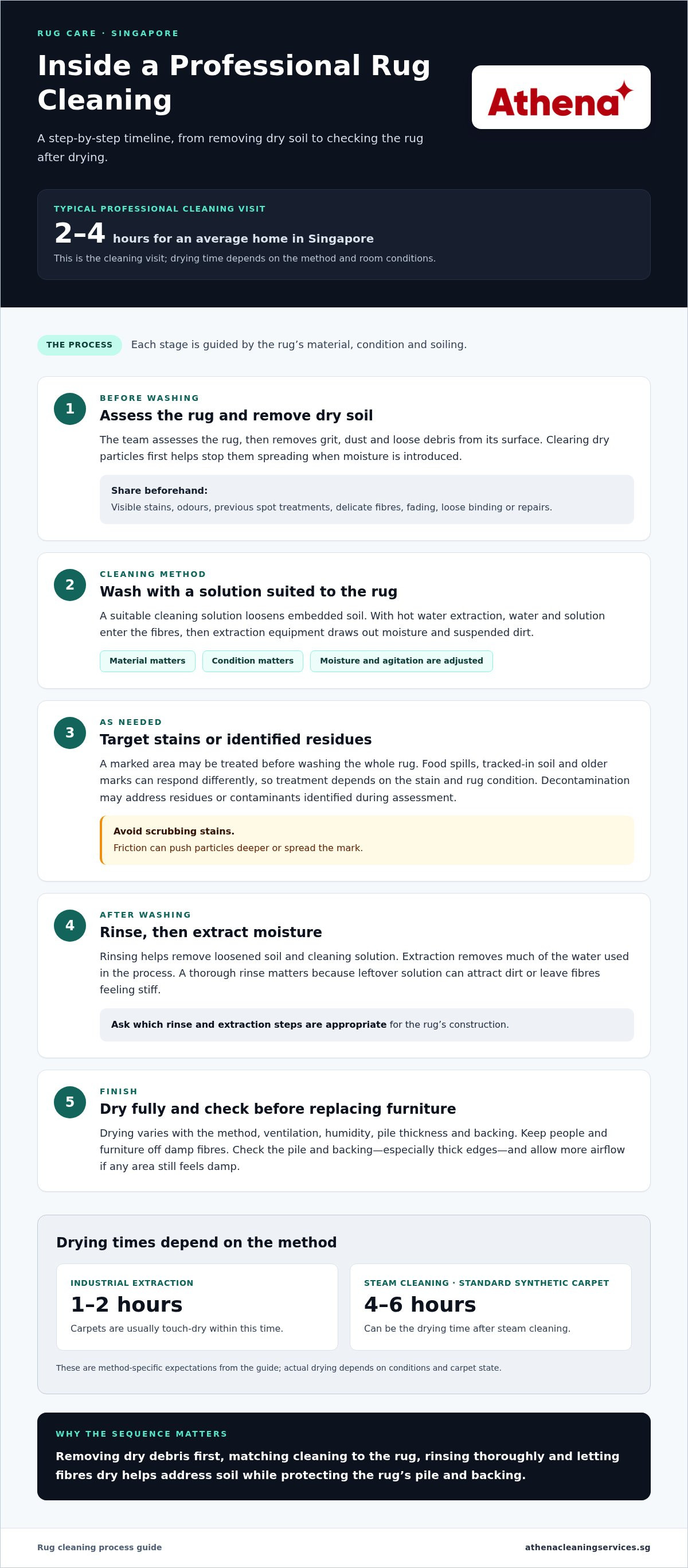
Professional carpet cleaning for an average home in Singapore typically takes two to four hours. That covers the cleaning visit, while drying time depends on the method and room conditions.
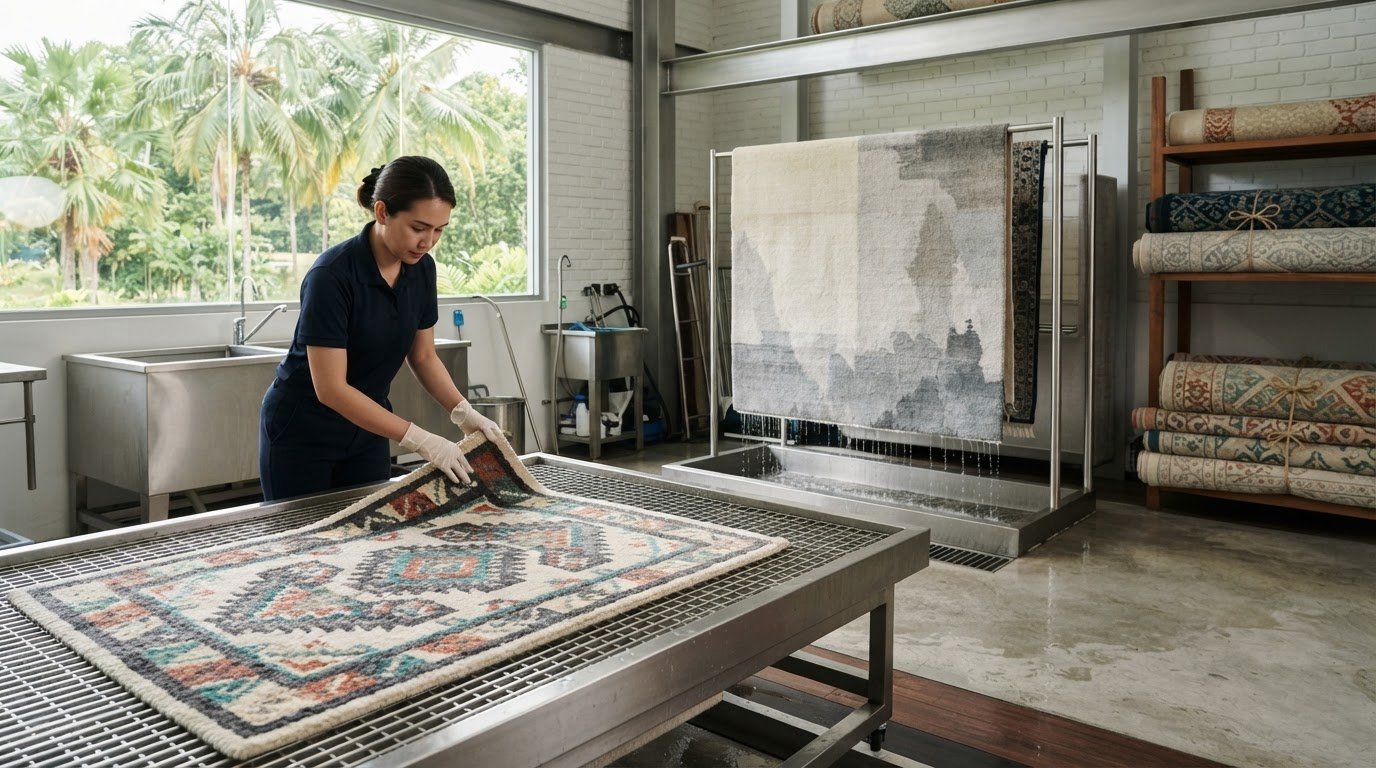
A careful cleaning process starts by removing dry soil, then matching the wash to the rug. This helps prevent loose debris from becoming harder to remove during wet cleaning.
Washing and Decontamination
Before washing, dry particles are removed from the rug’s surface. This clears grit, dust and loose debris that could spread when moisture is introduced. Tell the cleaning team about visible stains, odours and previous spot treatments, since those details can guide the next steps.
Washing applies a cleaning solution suited to the carpet, then loosens embedded soil. Hot water extraction is one method: water and cleaning solution enter the fibres, and extraction equipment draws out moisture and suspended dirt. Decontamination may address residues or contaminants identified during assessment. The required process depends on the carpet’s material and condition.
Stains need targeted attention. A food spill, tracked-in soil and an older mark can respond differently to cleaning. A cleaner may treat the affected area before washing the whole rug, avoiding unnecessary treatment elsewhere. Avoid scrubbing a stain yourself, since friction can drive particles deeper or spread the mark.
Tell the cleaning team if a rug has delicate fibres, loose binding, fading or a previous repair. These details affect how much moisture and agitation are appropriate. A measured approach helps protect the pile and backing during cleaning.
Rinsing and Drying
After washing, rinsing helps remove loosened soil and cleaning solution. Extraction then removes much of the water used in the process. A thorough rinse matters because leftover solution can attract dirt or leave fibres feeling stiff. Ask which rinse and extraction steps suit your rug’s construction.
Drying follows extraction. Carpets cleaned with industrial extraction technology are usually touch-dry within 1-2 hours. Air movement, humidity, pile thickness and backing can affect how quickly a carpet dries. Keep people and furniture off damp areas, and avoid placing heavy objects on wet fibres.
Check the rug before returning furniture. Feel the pile and backing, especially near thick edges or over a dense underlay. If an area still feels damp, allow more airflow before covering it. This helps prevent moisture from becoming trapped beneath furniture.
For clearer expectations, ask which stages are included, what method will be used, and how drying will be managed. A professional rug cleaning service can explain how its cleaning steps address the carpet’s condition and material.
Home pickup and delivery
Collection can make rug cleaning easier when a rug is bulky or transport is difficult. Before the appointment, note its size and stains, and clear a route from the room to the entrance.
Collection and Delivery
A pickup arrangement moves the rug from the home to a cleaning location, then returns it after cleaning. Before collection, note the rug’s dimensions, material, condition and any stains. These details help plan handling and cleaning. Check that the route past doorways, lifts and furniture allows the rug to be carried without dragging or folding it tightly.
Agree on the collection and return arrangements as part of the service booking. Make sure the person receiving the rug can identify it, especially if several rugs are collected. Point out delicate edging, loose threads or previous repairs in person. On return, inspect the rug’s surface and edges before placing furniture back on it.
Collection logistics matter in Singapore homes where narrow corridors, lift access or loading areas can affect carrying. Move small obstacles, such as shoes or floor mats, from the route. If a rug sits beneath a bed or sofa, clear the furniture beforehand so it can be rolled without catching on corners.
Preparing Rugs for Collection
Before cleaning, remove small furniture, toys and loose objects from the rug. Vacuum it if dry debris is present, and photograph visible stains or damaged edges. Tell the cleaning team where spills occurred and whether you used a spot treatment. This record helps distinguish existing marks from changes after cleaning.
If the rug’s construction allows, roll it with the pile facing inward. Avoid sharp folds, tight ties or adhesive tape on the fibres. Keep the rug dry and away from wet shoes or household rubbish while it awaits cleaning. For a delicate or unusually shaped rug, avoid forcing it into a roll.
Prepare a clear note with the rug’s room, material if known and the areas needing attention. For example, identify a drink stain near one corner and a loose fringe on the opposite edge. Share any care instructions that came with the rug. These details support careful handling throughout the cleaning process.
After cleaning, compare the rug with your photographs and check its edges, fringe and treated areas. Let it air before replacing heavy furniture, especially if the fibres still feel damp. Keep the route clear when moving the rug, since carrying it over clutter can cause fresh snags or soil.
Obtaining a quote and scheduling service
A useful quote starts with clear details about the rug and the work needed. Before requesting pricing from Athena Team Cleaning, note its dimensions, material, condition and any stains.
Requesting a Service Quote
The price depends on the rug and the work required. Cost factors include its size, material, level of soiling, stains and any requested treatments. Describe these details clearly so the quote reflects the cleaning scope.
Include the rug’s dimensions and fibre type, if known. A wool rug with fringe needs different handling from a flat synthetic rug. Mention fading, loose edges, previous repairs and heavily worn areas, since these details can affect the cleaning approach.
Describe each stain by its location and likely source. For example, say whether a mark came from a drink, food or tracked-in soil. Mention whether you have already used a cleaning product on it, since previous products can affect how the stain responds to further treatment.
Photos can help show the rug’s condition and problem areas. Take clear images in good light, including the full rug, close-ups of stains and any visible damage. Add the pickup address and whether the rug is on a particular floor. These specifics help define the scope before scheduling.
Review the quote to understand the cleaning work it covers. Check whether it includes the whole rug or only a marked area, and whether any requested stain treatment or deodorising is part of the scope. Keep the quote details handy when arranging the appointment.
Scheduling the Cleaning Service
After reviewing the quote, choose a service date that gives you time to prepare the rug and its route. Note the agreed appointment details in your calendar, including the collection address and any building access instructions. If someone else will be home, share the rug’s location and the details they should point out.
Plan around household activities. Move furniture before cleaning, and keep children’s toys, shoes and loose items away from the route. For a rug beneath a dining table, clear the chairs and tableware first. This makes handling more straightforward and reduces the chance of snags.
Record the rug’s condition before cleaning. Photograph the pile, fringe, backing and existing stains for reference. Keep any care label or cleaning instructions with your notes, and point out fragile edging or previous repairs when discussing the work.
Make space to inspect and air the rug after cleaning. Keep heavy furniture off it until the fibres feel dry. If the rug is part of a larger cleaning plan, coordinate access so other household tasks do not block the space. A prepared area makes it easier to return the rug to use.
Cleaning frequency for Singapore's humid climate
In Singapore, an average household should arrange professional carpet cleaning every six to 12 months. The right point in that range depends on traffic, household needs and visible soiling. Use the rug’s placement and condition to set a practical routine, rather than relying on the calendar alone.
High-use rugs need more frequent attention. Households with high-traffic areas, pets, children or allergies may need professional cleaning every three to six months. A rug beside the main entrance, for example, collects more tracked-in dirt than one in a spare room. Look for darkened paths, flattened pile and persistent odours when deciding whether to shorten the interval.
For lower-traffic spaces, once a year is a useful starting point for professional rug or carpet cleaning. A rug under a rarely used guest bed may stay cleaner than one in a living room. Medium-traffic areas call for a closer review between annual cleans. Adjust the schedule if regular vacuuming no longer lifts visible dust or if stains remain after prompt spot care.
Singapore’s humidity makes drying an important part of rug care. After a spill or spot clean, avoid covering damp fibres with furniture or another rug. Allow airflow and check the backing before returning the rug to regular use. Do not apply another damp treatment while moisture is lingering.
Build a simple inspection habit. Check busy paths, edges and areas beneath dining chairs while vacuuming. Note fresh spills promptly and blot rather than rub. Keeping a record of the last professional clean and recurring marks makes it easier to spot when a rug needs attention.
Households with allergies can use a six-month cleaning interval as a practical reference. Homes with pets or young children may also benefit from the shorter three-to-six-month range, especially where rugs see daily use. A low-traffic rug can follow an annual schedule if it remains in good condition. These intervals are starting points, not substitutes for checking the rug itself.
Set your schedule by combining use, condition and drying needs: inspect often, clean promptly after spills, and plan professional care every six to 12 months for an average household. If high traffic, pets, children or allergies apply, consider the three-to-six-month interval. Arrange professional rug cleaning to plan care around your household’s routine.
Athena Team Cleaning provides Carpet and Rug Cleaning for homes. Its services also include Sanitization Services, helping you address rug care alongside broader cleaning needs.
Choose Athena Team Cleaning’s Carpet and Rug Cleaning service when rugs need professional attention. Share the rug’s material, size and condition when describing the work, so the cleaning scope suits your needs.
For service information or to discuss your cleaning needs, visit Athena Team Cleaning.
Make rug care part of a cleaner space
A well-kept rug can shape how a room feels, but it needs care suited to its material and everyday use. Notice changes in appearance, respond promptly to spills and arrange professional cleaning when routine care is no longer enough.
Choosing a rug cleaning service in Singapore is one step towards a cleaner home. Athena Team Cleaning offers Carpet and Rug Cleaning to help you manage rug care as part of maintaining the wider space.
Share what you need cleaned and the condition of the rug to start a practical conversation about the work. Contact Athena Team Cleaning to discuss your cleaning needs and take the next step toward a fresher, well-maintained space.
Frequently Asked Questions
How can I choose the right carpet cleaning service?
Choose a service that explains its cleaning approach and defines the work in writing. Match the provider’s experience to your carpet’s fibre, construction and condition, especially for handmade or older pieces. Before booking, compare the stated scope, treatment options, drying guidance and collection arrangements. For example, a flat synthetic carpet and a fringed wool rug need different handling, so share those details upfront.
What's Included in the Service?
The cleaning work depends on the scope agreed for your rug. A quote should make clear whether it covers the whole item, stain treatment, deodorising or other requested care. For instance, general cleaning may not include separate treatment for a persistent odour. Review the listed work so you understand what the service covers.
What rug cleaning services are available in Singapore?
Options include carpet and rug cleaning, with different approaches for routine soil, stains and delicate fibres. Athena Team Cleaning offers Carpet and Rug Cleaning. For a home rug, describe the item and its use so the service scope reflects the setting. Treatment choices depend on the rug’s material, construction and condition.
How much does rug cleaning cost in Singapore by rug size and material?
Cost varies with the rug’s dimensions, fibre, construction, soiling and required treatment. A large rug takes more handling than a small mat, while delicate fibres may need a more careful process. Pricing depends on the case and is provided after a quote request. Share the rug’s size, material if known, condition and any stains to explain the work involved.
What rug cleaning methods do Singapore companies offer, such as steam cleaning or washing?
Common approaches include hot water extraction, often called steam cleaning, and washing methods suited to particular rug constructions. The appropriate option depends on fibre, dyes, backing and soil. For example, a moisture-sensitive rug needs a different approach from a durable synthetic carpet. Ask for the method to be identified in the service scope, and consider whether the rug’s care label gives specific handling instructions.
How do I choose a rug cleaning service for wool, silk, or delicate rugs?
A suitable cleaning approach takes account of the rug’s fibre, dyes, backing and existing wear. Wool, silk and handmade rugs can react differently to moisture, agitation and cleaning agents. Share any care-label instructions, previous repairs or colour changes, and point out loose fringes. The cleaning method should suit the rug rather than treat every material identically.
Do Singapore rug cleaners offer pickup and delivery, and what are the fees?
Pickup and delivery arrangements vary by cleaner, so include transport in the service scope rather than assuming it is part of cleaning. Fees depend on the rug, collection requirements and delivery arrangements. If collection is available, prepare the rug’s dimensions, address and building access details. This helps establish what transport involves and keeps collection, cleaning and return expectations clear from the start.
What is included in a rug cleaning service, and are stain or odour treatments extra?
Basic cleaning and additional stain or odour treatments may be listed as separate parts of a quote. The exact scope depends on the rug and the issue being treated. Identify the source and location of each mark or smell, and mention any products already applied. This helps distinguish general cleaning from targeted treatment and clarifies which requested tasks appear in the final service scope.
Frequently Asked Questions
How can I choose the right carpet cleaning service?
What's Included in the Service?
What rug cleaning services are available in Singapore?
How much does rug cleaning cost in Singapore by rug size and material?
What rug cleaning methods do Singapore companies offer, such as steam cleaning or washing?
How do I choose a rug cleaning service for wool, silk, or delicate rugs?
Do Singapore rug cleaners offer pickup and delivery, and what are the fees?
What is included in a rug cleaning service, and are stain or odour treatments extra?
Related articles