Post-tenancy cleaning in Singapore: costs and deposit returns
In this article
- Key Takeaways
- Table of Contents
- Is professional cleaning required at end of tenancy in Singapore?
- Why end-of-tenancy cleaning matters for deposit returns
- How much does the end of lease cleaning cost?
- Whether professional end-of-tenancy cleaning is required
- Whether end-of-tenancy cleaning is legally required in Singapore
- Athena Team Cleaning: Office Cleaning
- Make your next handover a confident one
- Frequently Asked Questions
A professional clean isn’t automatically required at the end of every tenancy in Singapore. Post-tenancy cleaning requirements in Singapore depend on your tenancy agreement and the condition in which the property must be returned, often described as “broom-clean.” Booking a cleaner does not guarantee your deposit will be returned; the agreement and handover condition matter.
Before returning the keys, it helps to have a clear checklist, especially when cleaning expectations and possible deposit deductions are uncertain. The practical goal is to leave the property in the agreed condition, allowing for normal wear from everyday use.
This guide explains what “broom-clean” can mean, how cleaning relates to deposit returns, and what affects the scope and cost of a move-out clean, including property size and condition. It also covers key areas to review, from kitchen grease and bathroom surfaces to floors and windows, so you can plan the handover with greater confidence.
Key Takeaways
- Read your tenancy agreement to understand the required handover condition; professional cleaning isn’t automatically required for every rental.
- Document the property’s condition and distinguish cleaning issues from ordinary wear and tear when discussing deposit deductions.
- Prioritise kitchens, bathrooms, floors, windows and household fixtures, where overlooked dirt can affect the handover.
- Cleaning scope and cost depend on the property’s size, condition and the tasks required, so plan around the actual handover needs.
- Agree on the expected condition with your landlord and arrange cleaning before the final inspection if the property needs attention.
Is professional cleaning required at end of tenancy in Singapore?
Professional cleaning isn’t automatically required for every Singapore tenancy. Your agreement and the handover condition determine what’s expected. HDB flats, condominiums and other private rentals follow the condition agreed for that tenancy, not a single checklist based only on property type.
Rooms and Fixtures in Handover Cleaning
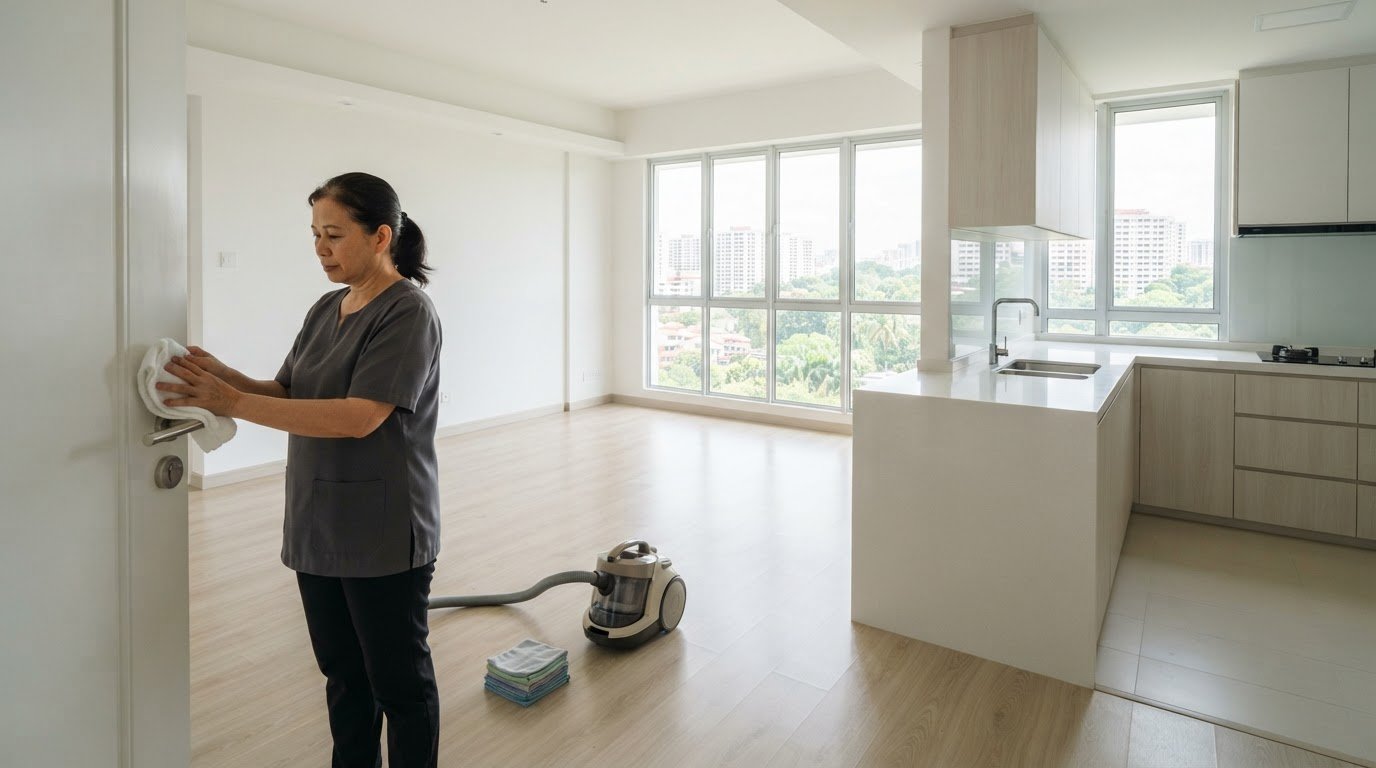
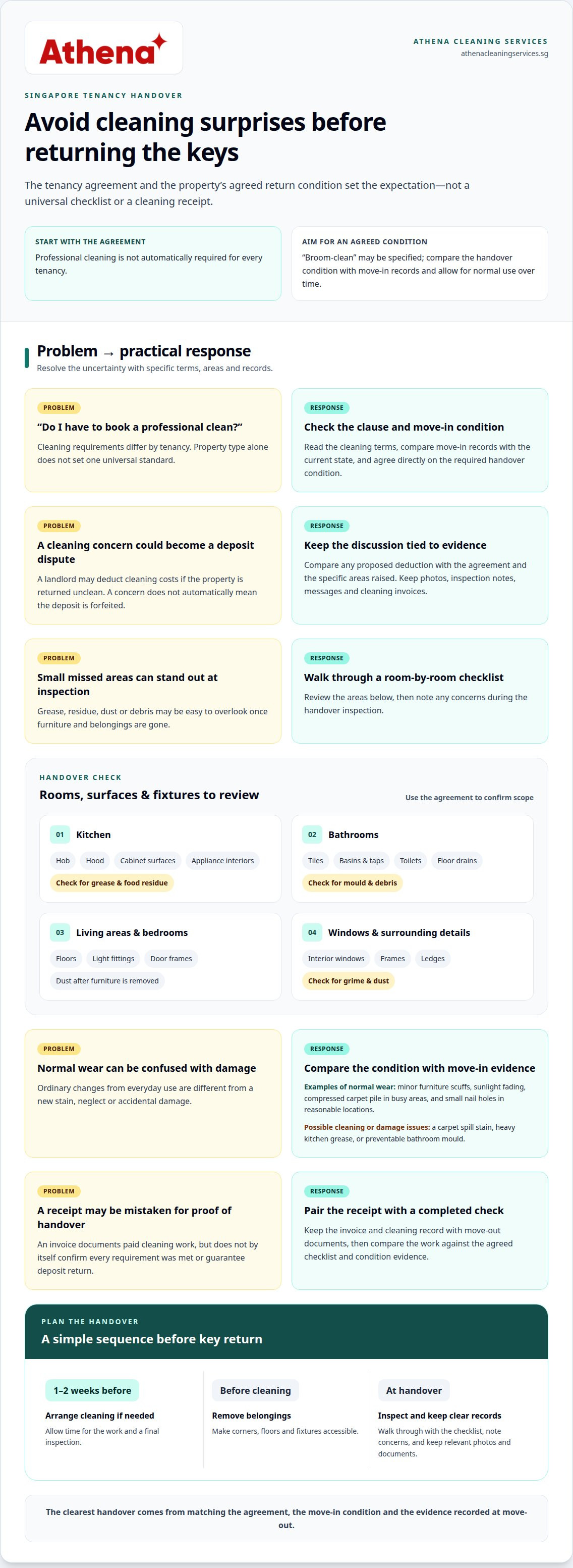
Handover cleaning covers the rooms and fixtures that need attention before the landlord’s inspection. A practical checklist includes living areas, bedrooms, kitchens and bathrooms, as well as floors, interior windows, frames, ledges, light fittings and door frames.
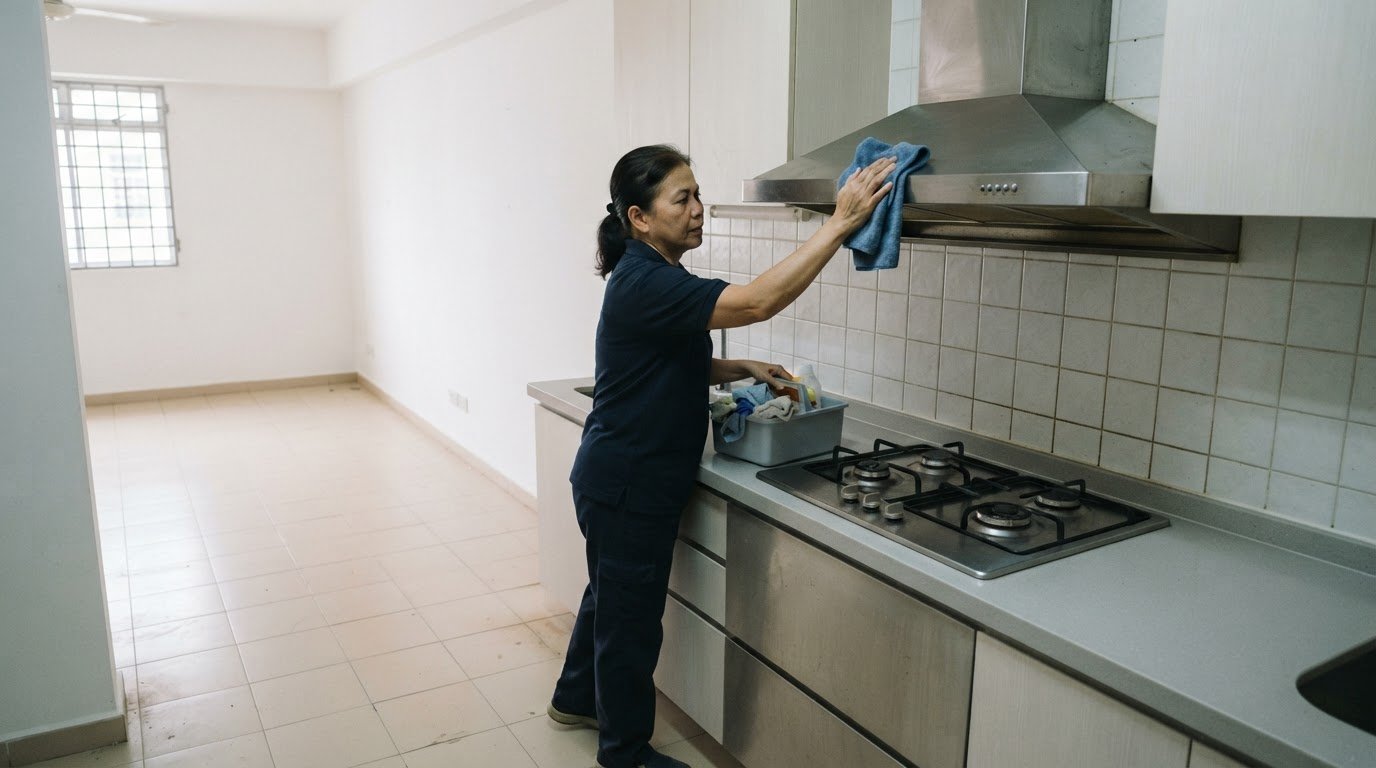
In the kitchen, check the hob, hood, cabinet surfaces and appliance interiors for grease or food residue. In bathrooms, inspect tiles, basins, taps, toilets and floor drains. Dust on a bedroom light fitting or grime on a window ledge is easy to miss after furniture is removed, so review each area systematically.
Singapore Handover Cleaning Requirements
Singapore tenancy handovers are guided by the agreement between landlord and tenant, including the condition required at return. Private rental agreements via CEA stipulate a “broom-clean” condition, while the expected handover condition is broadly comparable to the property’s state at move-in, allowing for normal use over time.
Read the cleaning clause and compare it with move-in records before deciding whether professional end-of-tenancy cleaning is needed. Some agreements may include a cleaning obligation, but a cleaner’s quotation alone doesn’t determine contractual liability, deposit deductions or the landlord’s acceptance. Agree directly on the required condition before arranging work.
Receipts and Handover Checks
Receipts document paid cleaning work, but don’t establish on their own that every handover requirement has been met. Keep the invoice and any cleaning record with your move-out documents, then compare the completed work against the agreed checklist.
During inspection, the landlord or agent may look for missed areas such as kitchen grease, bathroom mould, dusty fixtures or debris in floor drains. Walk through the unit with your checklist and note concerns before returning the keys. Clear records help both parties discuss specific cleaning issues rather than rely on general impressions.
Cleaning Across Rental Types
HDB flats, condominiums and other private rentals don’t have one universal cleaning standard based solely on category. The tenancy agreement and the property’s move-in condition shape the expected handover; the unit’s layout and fixtures determine which areas need attention.
For example, a condominium with extensive windows may need closer attention to frames and ledges, while an HDB kitchen may call for careful checks around the hob and hood. These are differences in scope, not separate rules. Compare the agreement, move-in records and current condition to build a checklist for your home.
Book cleaning 1 to 2 weeks before handover to allow time for the work and a final inspection. Remove belongings first so cleaners can reach corners, floors and fixtures. If the agreement specifies a cleaning deposit or other cleaning arrangement, clarify how it applies before move-out; don’t assume a receipt changes the agreed terms or guarantees deposit return.
Why end-of-tenancy cleaning matters for deposit returns
A clean handover can reduce disputes about avoidable dirt, but it doesn’t settle every deposit issue. The tenancy agreement, the property’s condition at move-in and the evidence recorded at handover all matter.
Cleaning Costs and Deposit Deductions
A landlord may deduct cleaning costs from a security deposit if the property is returned unclean. The handover condition matters: grease on a hob, food residue on appliances or mould on bathroom tiles may point to cleaning that was missed.
Compare any proposed deduction with the tenancy agreement and the specific areas raised during inspection. If a landlord arranges cleaning after a disputed handover, the cost may be deducted from the deposit. Ask for the reason and supporting details, then compare them with your move-in and move-out photos, checklist and any cleaning receipt.
Damage and Fair Wear and Tear
Fair wear and tear means ordinary changes from using a home over time, not damage caused by neglect or an accident. Minor wall scuffs from furniture, fading from sunlight, compressed carpet pile in busy areas and small nail holes in reasonable locations are examples of normal wear.
By contrast, a carpet stain from a spill, heavy grease on kitchen surfaces or preventable bathroom mould may be treated as a tenant cleaning or damage issue. Look closely at the difference between an existing mark and a new stain. Move-in photos and dated inspection notes can help show whether a condition developed during the tenancy or was already there.
Cleanliness Disputes and Deposit Returns
If a landlord disputes cleanliness, compare the complaint with the agreement, handover checklist and condition evidence. A deposit isn’t automatically forfeited because the landlord raises a cleaning concern; discuss the specific condition and any relevant agreement terms.
Keep the discussion focused on specifics. If the landlord cites dirty floors, ask which rooms and surfaces were affected, then compare those areas with your photos and cleaning receipt. Reply in writing and keep copies of inspection notes, messages and invoices. These records help distinguish an agreed cleaning obligation from ordinary wear or a disputed claim.
Before returning the keys, photograph each room, appliances, carpets and floors after cleaning. If the kitchen or bathroom needs more attention, address those specific areas before inspection rather than relying on a general clean. A professional end-of-tenancy cleaning service can help prepare the property for handover, while receipts and clear records keep the deposit discussion grounded in the work completed.
How much does the end of lease cleaning cost?
In Singapore, a move-out cleaning quote reflects the unit’s size, condition and requested tasks. The price for professional end-of-tenancy cleaning depends on these factors and is provided after a quote request. A lightly used apartment needs a different scope from a larger, heavily soiled home with greasy appliances or persistent bathroom mould.
Time offers another way to understand the work involved, though it isn’t a price. A standard three-room or four-room HDB flat typically takes 4 to 5 hours to clean. A private condominium generally takes 5 to 7 hours, while a landed property may take 8 or more hours. Larger spaces and extra cleaning needs can extend the job.
What the cleaning scope covers
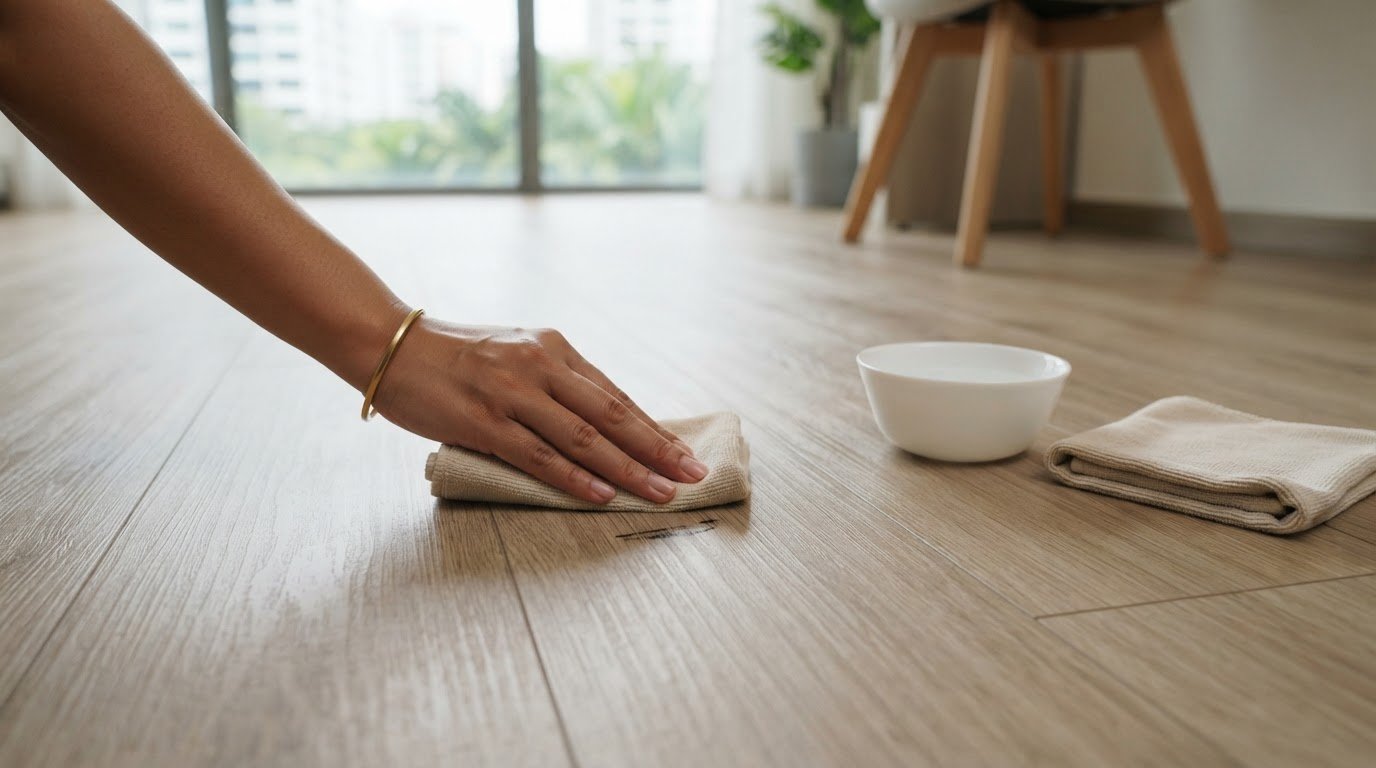
Living spaces and bedrooms usually need dust removed from accessible surfaces, followed by vacuuming or mopping floors. Cleaners can wipe door frames, light fittings, window ledges and interior window surfaces. Dust settles on overlooked fixtures as well as visible tabletops, so include both in your checklist.
In a kitchen, work may include wiping cabinet and appliance exteriors, removing grease and cleaning appliance interiors. An oven or fridge may need extra attention if spills or residue remain inside. Clear shelves and remove food first to make these surfaces accessible for thorough cleaning.
Bathrooms need a different approach. A typical scope may include toilet disinfection, tile scrubbing, cleaning basins and taps, and clearing floor drains. Mould or mildew needs focused attention, especially around damp corners and grout. Thorough bathroom cleaning also addresses soap residue and dirt beyond the main fixtures.
Windows, carpets and additional tasks
Interior windows, frames and ledges may be included in a move-out clean, while exterior windows or outdoor areas may require a separate scope. Clarify which windows and spaces are included so the requested work matches the rental property. Balcony floors, for example, are different surfaces from interior living-room floors.
Carpets, curtains and upholstery aren’t typically included in a standard end-of-lease clean, so stains on carpet or fabric may need separate treatment. Ask for each requested task to be stated clearly in the quote, especially if the handover checklist mentions carpets, blinds or soft furnishings.
For a smooth handover, compare the cleaning scope with the rooms and appliances that need attention. Note persistent grease, mould, stains or heavy dust before requesting a quote. This helps define the work and reduces confusion about which spaces are included.
Whether professional end-of-tenancy cleaning is required
Professional cleaning isn’t automatically required for every rental in Singapore. The tenancy agreement sets the handover condition, and some agreements include an end-of-tenancy cleaning clause. A professional clean is most relevant when the agreed standard is demanding, the property needs detailed work or you can’t complete the cleaning yourself before inspection.
Start with the signed agreement, then compare its wording with move-in records and the current condition. A requirement to return a home “broom-clean” doesn’t necessarily mean every surface needs specialist treatment. If the contract names a professional clean, treat that clause separately from general cleanliness expectations. The agreed wording is more useful than assuming the same standard applies to every tenancy.
Scope and tasks in a professional clean
A professional end-of-tenancy clean focuses on bringing a vacant property to its agreed handover condition. Tasks may cover living spaces and bedrooms, kitchen surfaces and appliances, bathroom fixtures, floors, interior windows, frames and ledges. The precise scope depends on the property’s condition and requested work, so compare it with the tenancy checklist before booking.
Examples include removing grease from a hob, wiping appliance interiors, disinfecting a toilet, scrubbing bathroom tiles and clearing debris from floor drains. Cleaners can also address dust on door frames, light fittings and window ledges. A standard three-bedroom apartment may take 6 to 10 hours to clean comprehensively, particularly when furniture must be cleared to reach corners and hidden surfaces.
Professional cleaning can also create a record of completed work. Documentation helps show which areas were cleaned before handover, but a receipt or cleaning record doesn’t guarantee deposit return or landlord acceptance. The contract and inspection findings still matter. Keep the service record with move-out photos and notes about existing marks.
When hiring cleaners makes sense
Consider professional cleaning when the rental has stubborn kitchen residue, bathroom mould, or dust throughout vacant rooms. It can also help when a move-out schedule leaves limited time for detailed work. A post-tenancy cleaning session lasting 5 hours illustrates that even a single booking can involve focused work across several areas.
Before arranging tenancy cleaning, list the surfaces and fixtures mentioned in the agreement. Remove furniture and personal belongings, then identify any work that needs separate treatment, such as carpets or curtains. This keeps the scope aligned with the handover instead of assuming every service covers the same tasks. Choose the option that fits the contract and the property’s condition, not simply the word “professional.”
Whether end-of-tenancy cleaning is legally required in Singapore
Singapore does not impose one universal professional-cleaning requirement on every tenant. The key distinction is between the condition required at handover and who performs the cleaning. A tenancy agreement may require a clean return without requiring a paid cleaning service. Read the clause and compare it with move-in records. The contract, rather than property type alone, shapes the handover obligation.
For private rentals, agreements via CEA stipulate a “broom-clean” condition, according to CEA. That describes a handover standard, not an automatic instruction to hire professionals. The parties should agree directly on the required property condition. A cleaning quotation doesn’t determine contractual liability, deposit deductions or landlord acceptance. If the agreement names a professional clean, that clause matters; otherwise, focus on the stated return condition.
Use the wording to define the work. “Broom-clean” may mean removing rubbish, vacuuming floors and leaving visible surfaces tidy, while a more detailed clause may name appliances or bathrooms. Check whether the toilet, kitchen, windows, curtain tracks or upholstery appear in the agreement or inventory. Don’t assume every fixture needs deep cleaning simply because it’s part of the home. The scope follows the agreed condition and specific clauses.
Normal use matters too. A handover is generally assessed against the property’s starting condition, allowing for ordinary wear over time. For example, a clean floor with everyday wear differs from one left with food residue. Compare dated move-in and move-out photos, inventory notes and inspection records. If the landlord raises a concern, ask which surface or room falls short, then respond with the relevant evidence and clause.
Before returning the keys, use a room-by-room checklist: clear belongings, remove rubbish, vacuum floors, wipe kitchen surfaces and clean bathroom fixtures as required. Photograph windows, appliances and any pre-existing marks after the work. Keep receipts if you arranged cleaning, but treat them as records of the service, not proof that every contract term has been met. A focused final inspection helps separate cleaning questions from wear-and-tear issues.
If the agreed scope calls for a professional finish, arrange end-of-tenancy cleaning for the handover.
Athena Team Cleaning: Office Cleaning
Athena Team Cleaning provides Office Cleaning for businesses preparing premises for a lease handover. A clear scope can help address work areas and shared spaces before inspection. Carpet and Rug Cleaning and Sanitization Services are also available when they suit the premises’ needs.
Building Maintenance supports broader upkeep beyond routine cleaning. Choose the service that matches the space and required work, rather than assuming residential tenancy requirements apply to a commercial office. A defined scope keeps the handover focused on areas that need attention.
Visit athenacleaningservices.sg to discuss cleaning needs for your premises.
Make your next handover a confident one
Before moving on, turn the agreed handover condition into a clear plan for your next tenancy. Keep the agreement, condition photos and inspection notes together, then use them to document the property at move-in and move-out. A careful record gives you a practical reference if questions arise later.
Understanding Singapore’s post-tenancy cleaning requirements also helps businesses preparing leased premises. Athena Team Cleaning offers Office Cleaning, Building Maintenance, and Carpet and Rug Cleaning for commercial spaces that need attention before handover. Each service addresses different cleaning and upkeep needs, so choose the support that matches the premises and the work required.
For help with your cleaning needs, contact Athena Team Cleaning. A well-prepared space is a positive step toward your next chapter.
Frequently Asked Questions
What Are The Steps in Doing End Of Tenancy Cleaning?
Work from the agreement and move through the property in a consistent order. First, remove belongings and rubbish so surfaces are accessible. Clean kitchen and bathroom fixtures, then bedrooms and shared areas. Dust before vacuuming or mopping, so settled dirt isn’t tracked back across the floors. Finally, compare each room with the handover checklist, note any remaining issues and photograph the finished space.
Can landlords charge for cleaning after tenancy?
Yes, a landlord may seek cleaning costs if the property is handed back unclean, and those costs may be deducted from the security deposit. The relevant question is whether the condition falls short of the tenancy agreement, not whether you hired a cleaner. If a charge is raised, ask which area it covers and compare the claim with the agreed handover condition and your records.
What About Curtains and Upholstery?
Curtain and upholstery cleaning aren’t typically part of a standard end-of-lease clean, so treat them as separate items in your planning. Check whether the agreement or inventory specifically mentions curtains, blinds, sofas or other fabric furnishings. Before arranging treatment, identify visible stains or odours and record their condition. This helps distinguish a requested cleaning task from general room cleaning.
What does a standard Singapore tenancy agreement require for end-of-tenancy cleaning?
There isn’t one cleaning scope for every Singapore tenancy agreement. Private rental agreements via CEA stipulate a “broom-clean” condition, while the agreement’s wording sets expectations for that tenancy. Look for specific terms about cleanliness, fixtures or professional cleaning, then compare them with the inventory. If a clause is broad, clarify the expected handover condition with the landlord before moving out.
Is professional or commercial cleaning required when moving out in Singapore?
Not automatically. The agreement and required handover condition determine whether professional cleaning is needed. “Commercial cleaning” describes a service type, not a universal move-out obligation for residential tenants. For example, a tenant may clean a lightly used unit personally if that meets the agreed condition. Treat a contract that expressly requires professional cleaning differently from one that only requires a clean return.
What cleaning clauses are commonly included in Singapore rental agreements?
Cleaning clauses can describe the required return condition, such as “broom-clean,” or specify an end-of-tenancy cleaning service. Agreements may also require the home to be returned clean and well-maintained, subject to fair wear and tear. Read the full clause alongside any inventory or handover schedule. A general cleanliness term and a named professional-cleaning requirement aren’t interchangeable, so note the exact wording.
Who pays for end-of-tenancy cleaning in Singapore: landlord or tenant?
The tenancy agreement and the unit’s handover condition help determine who bears the cost. A tenant may face a cleaning deduction if the property is returned unclean, while an agreed cleaning obligation can assign responsibility differently. Distinguish the cost of hiring a cleaner from responsibility under the agreement. Before moving out, identify who must arrange the work, what standard applies and how any post-inspection charge will be explained.
What cleaning standards apply to kitchens, bathrooms, appliances, and air conditioners at move-out?
Post-tenancy cleaning requirements in Singapore depend on the agreement’s wording and the fixtures listed for handover. A practical kitchen check can include grease on the hob, residue on cabinet surfaces and appliance interiors; a bathroom check can cover the toilet, tiles and drain. For air conditioners, follow any specific cleaning term in the agreement or inventory instead of assuming a particular service is included.
Frequently Asked Questions
What Are The Steps in Doing End Of Tenancy Cleaning?
Can landlords charge for cleaning after tenancy?
What About Curtains and Upholstery?
What does a standard Singapore tenancy agreement require for end-of-tenancy cleaning?
Is professional or commercial cleaning required when moving out in Singapore?
What cleaning clauses are commonly included in Singapore rental agreements?
Who pays for end-of-tenancy cleaning in Singapore: landlord or tenant?
What cleaning standards apply to kitchens, bathrooms, appliances, and air conditioners at move-out?
Related articles