Is Professional Upholstery Cleaning Worth the Cost?
In this article
- Key Takeaways
- Table of Contents
- How long would it take for furniture to dry after steam cleaning?
- Is professional sofa cleaning expensive?
- Fabric-specific cleaning methods
- Stain and odour removal
- Benefits of professional upholstery cleaning
- Athena Team Cleaning: Office Cleaning
- Make a considered choice for your space
- Frequently Asked Questions
Professional upholstery cleaning is often worth the investment when furniture has embedded grime, persistent odours or stains that routine vacuuming can’t reach. For many households asking whether professional upholstery cleaning is worth it, the answer comes down to the condition of the fabric and the value of keeping the furniture comfortable and presentable. Professionally cleaned sofas commonly dry within 2-6 hours, depending on the fabric and ventilation.
It’s reasonable to weigh the cost against what you can achieve with home cleaning. A professional method suited to the fabric can remove accumulated dirt more thoroughly and reduce the risk of damage from an unsuitable cleaner or technique.
This guide explains what affects upholstery cleaning costs in Singapore, how professionals choose a method, and what to expect from stain and odour treatment. You’ll also learn about drying and the practical benefits that can make professional cleaning worthwhile, so you can decide what makes sense for your furniture.
Key Takeaways
- Professional cleaning can help lift embedded dirt and refresh upholstery, while regular vacuuming and prompt spill care support its condition between cleans.
- Professionally cleaned sofas commonly dry within 2-6 hours, with fabric and ventilation affecting the time; let furniture dry completely before using it.
- Cleaning methods should suit the upholstery material, since an unsuitable product or technique can cause discolouration, shrinkage or other damage.
- Promptly blot fresh spills rather than rubbing them, and understand that older or set-in stains may be reduced rather than fully removed.
- Removing accumulated grime and allergens can improve the freshness of upholstered spaces and help preserve fabric over time.
How long would it take for furniture to dry after steam cleaning?
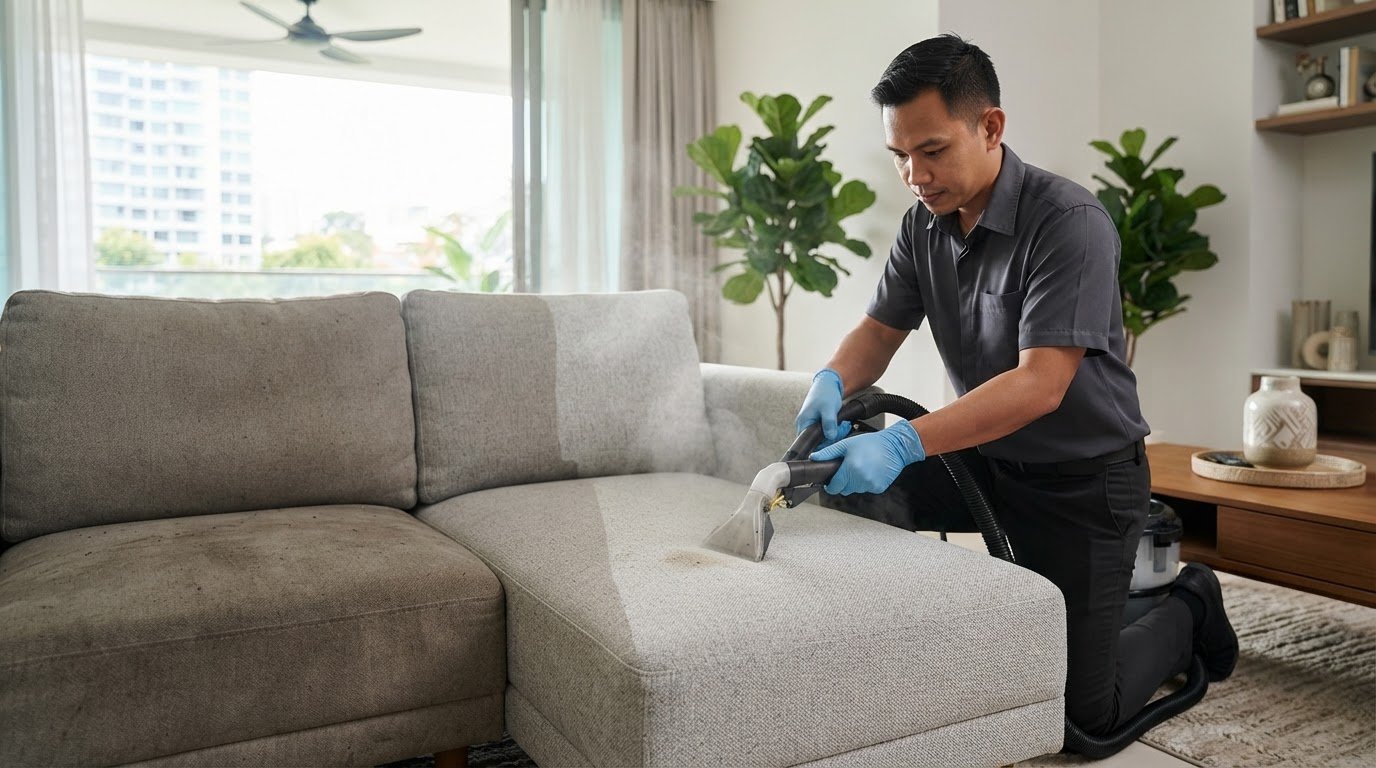
After steam cleaning, upholstered furniture can take 1 to 24 hours to dry. A common estimate is 2 to 8 hours, while most professionally cleaned sofas dry within 2-6 hours. Fabric, moisture extraction, room airflow and Singapore’s humid conditions all influence drying time.
How can you tell whether upholstery needs professional cleaning or replacement? If the frame and cushions are sound but the fabric looks dull, holds odours or has accumulated grime, deep cleaning may refresh its appearance. If the furniture has structural damage or permanent dye fading, cleaning won’t fix those problems.
Drying time matters because damp furniture can hold moisture against cushions and fabric. Leave the piece undisturbed until it feels dry throughout, including at seams and cushion edges. Open windows or use a fan to improve airflow where practical. A large sofa, delicate fabric or poorly ventilated room may take longer to dry than a smaller chair in a breezy space.
Drying is only one part of the value calculation. Dirt and grit work into upholstery during everyday use and can wear fibres as people sit and move across cushions. Deep cleaning removes accumulated soil that routine vacuuming may not reach. By helping preserve fabric, regular professional cleaning may delay replacement and help avoid costly repairs.
The benefit depends on the furniture’s condition. A sofa with intact seams, resilient cushions and a stable frame may have useful years left after cleaning. A sagging seat, broken support or faded patch won’t be restored by removing surface grime. Consider whether a clean, sound piece will remain useful, rather than expecting cleaning to make worn furniture new.
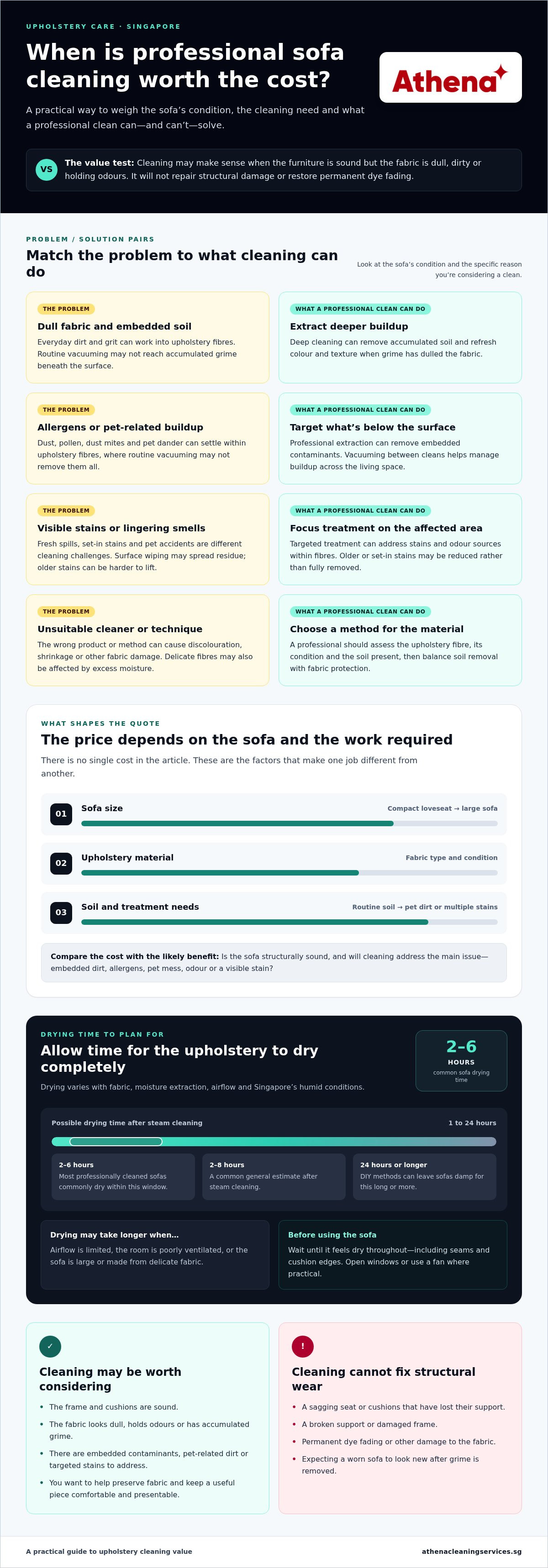
Cleaning can also refresh colour and texture when dirt and grime have dulled the fabric. It may help remove dust mites and other allergens embedded in upholstery, which regular vacuuming cannot reach as effectively. These improvements can make a frequently used sofa feel cleaner and more comfortable, while supporting a more considered return on the furniture’s original cost.
Steam cleaning isn’t the only method, and “steam” doesn’t mean every fabric receives the same treatment. A professional should assess the material and its condition first, since excess moisture or an unsuitable method can damage delicate fibres. Different fabrics may call for different approaches. The right method balances soil removal with protecting the upholstery.
For planning, expect professionally cleaned sofas to dry within 2-6 hours in typical conditions, but allow more time when airflow is limited. DIY methods can leave sofas damp for 24 hours or longer. Don’t move furniture back into its usual place or use it until it has dried completely. That final wait helps protect both the freshly cleaned upholstery and the floor beneath it.
Is professional sofa cleaning expensive?
Professional sofa cleaning costs vary according to the sofa and the work required. Athena Team Cleaning provides a price after you share your home type through WhatsApp for a quick quote. Size, upholstery material, condition and cleaning needs all matter. A compact fabric loveseat with routine soil is different from a large sofa with pet-related dirt and several areas to treat.
Cost is only one part of the decision. Dust, pollen, dust mites and pet dander can settle within upholstery fibres, where routine vacuuming may not remove them all. Professional cleaning can extract embedded contaminants that surface cleaning leaves behind. For households concerned about allergens, this deeper clean may help address triggers around a frequently used sofa.
Consider the rest of the room, too. Dust and allergens can collect in carpets and soft furnishings, so cleaning only a sofa may leave other areas untouched. A pet bed beside the couch, for example, is another fabric surface that can hold dander. Regular vacuuming alongside upholstery cleaning helps manage buildup across the living space.
Stain and odour treatment also affect the value. A fresh drink spill differs from an older stain that has set into the fibres. Pet accidents can leave visible marks and lingering smells. Targeted professional treatment can address stains and odours, while surface wiping may spread residue. Point out specific stains or musty areas so they receive focused attention.
Judge the likely benefit against the sofa’s condition and use. Cleaning makes practical sense when the furniture is structurally sound but looks dull, smells stale or has visible soil. If cushions have lost their support or the frame is damaged, cleaning won’t fix those issues. Allergy concerns, repeated pet messes and a heavily used family sofa can all make a deeper clean more worthwhile.
- Dust mites and pollen: Deep extraction can remove contaminants embedded below the surface.
- Pet dander: Cleaning targets hair, dander and residue on upholstery used by pets.
- Lingering odours: Fibre-level treatment addresses odour sources rather than simply adding fragrance.
- Visible stains: Treatment is matched to the affected area, though older stains can be harder to lift.
To weigh the cost, identify the main problem first: allergens, odour, pet dirt or a visible stain. Then consider whether cleaning addresses it and whether the sofa is worth preserving. For a focused refresh of fabric seating, explore professional upholstery cleaning as part of maintaining a cleaner indoor space.
Fabric-specific cleaning methods
Cleaning methods should match the upholstery fibre, its condition and the soil present. For sturdy sofa fabrics, professionals may use hot water extraction; leather needs gentle conditioning. Frequency depends on use: heavily used furniture in homes with children or pets may benefit from cleaning every 6-12 months, regular-use furniture once a year, and lightly used pieces every 18-24 months.
Matching Methods to Fabrics
Identifying the fabric helps guide the cleaning method and products, so soil can be removed without compromising the upholstery. A technician should identify the fibres and check colourfastness before choosing an approach. Hot water extraction may suit sturdy sofa fabrics, while delicate textiles may need a gentler process. A method that works on one fabric can harm another.
Furniture labels can provide useful care information, but the visible surface also needs assessment. Velvet, for example, may respond differently from a tightly woven sofa cover. Soil, previous treatments and the fabric’s condition all influence the approach. Considering these factors helps protect the appearance while addressing dirt accumulated in the fibres.
Preventing Fabric Damage
A careful assessment helps reduce the risk of discolouration, shrinkage or other damage. Before cleaning, the upholstery should be inspected, its fibres identified and its colourfastness tested. These steps help determine suitable products and moisture levels. Skipping them can expose delicate fabric to an unsuitable method and leave marks that cleaning cannot reverse.
For example, colour transfer during a test signals a risk with wet treatment. A cautious method can then limit moisture or focus on a smaller area. This precision matters on patterned furniture, where colour changes may stand out across a cushion. Protecting the material also helps preserve a piece that remains structurally sound.
Leather and Fabric Care
Leather and fabric upholstery need different care because their surfaces respond differently to moisture and cleaning products. Fabric cleaning targets soil within woven fibres; leather care uses gentle conditioning. Leather sofas need annual conditioning to stay in top condition. Choosing the wrong cleaner for either material can affect texture, colour or appearance.
Check the furniture’s care label and note any previous treatment before cleaning. A fabric sofa with embedded dirt may need a method suited to its fibres, while leather requires a gentler approach. Treating each surface appropriately helps avoid damage and gives the material a better chance of a refreshed finish.
Cleaning frequency should reflect actual use, not a fixed schedule for every household. A sofa shared daily by children and pets collects more soil than an occasional-use armchair. Regular-use furniture can be cleaned once a year, while light-use pieces may need attention every 18-24 months. Vacuuming between professional cleans helps remove loose debris before it settles deeper.
For heavy daily use, consider professional cleaning every 6-12 months, especially where pets or children use the furniture. That interval can help manage recurring soil before it affects the fabric’s appearance. Rotating cushions also helps equalise wear, while prompt spill treatment reduces residue between cleans. These habits complement fabric-specific methods and can extend the life of upholstery.
Stain and odour removal
Stain and odour treatment works best when the approach suits both the upholstery and the mark’s condition. Fresh spills, pet accidents and musty smells each need different attention.
Removing Tough Stains
Effective stain removal targets residue within upholstery fibres, rather than merely improving the surface’s appearance. The stain’s age, source and previous treatment affect what cleaning can achieve. For a fresh drink spill, blot promptly instead of rubbing. Rubbing can spread the mark and push residue deeper into the material.
Older, chemically set or dye-transfer stains may be reduced rather than fully removed. A specialist can match products and equipment to the fabric, then focus treatment on the affected area. Point out marks before cleaning begins, including faint spots. Previous attempts with household cleaners can also affect the material and the appropriate treatment.
Removing Upholstery Odours
Odour treatment targets the source held in upholstery fibres rather than masking it with fragrance. Musty smells and pet-related odours can remain after surface wiping because residue has settled into the fabric. Specialised methods and products can address odours within the fibres, helping tackle the cause instead of covering the smell.
Describe the odour and where it occurs, such as a cushion affected by a pet accident. This helps direct treatment to the relevant area. If a spill caused both a visible stain and a lingering smell, mention both. Cleaning can then address the mark and odour as related problems, not separate surface issues.
For a light, recent spill, immediate action can limit how much liquid enters the upholstery. Blot carefully with a clean cloth rather than scrubbing. Mild detergent or upholstery foam can work for light spills. Test any household product on an inconspicuous area first, since an unsuitable cleaner may affect colour or texture.
Pet stains need particular care because visible residue may not show the full affected area. Specialised methods and products can treat pet stains and associated odours. Point out where an accident occurred, even if the surface looks clean. This gives the cleaning specialist useful context to treat the affected upholstery, not just the visible mark.
Cleaning results depend partly on a stain’s history. A recent spill differs from a dye-transfer mark or a stain already treated with household chemicals. Describe what caused the mark and any products previously applied. This information helps guide treatment and set realistic expectations for older or chemically set stains.
- Fresh spill: Blot promptly and avoid rubbing the fabric.
- Pet accident: Identify the affected area and mention any lingering odour.
- Musty smell: Describe where it occurs so treatment can target the source.
- Older mark: Share its history and previous cleaning attempts.
Professional upholstery cleaning can treat specific stains and odours with methods suited to the material. Clear details about each mark help focus the cleaning on the problems that matter most.
Benefits of professional upholstery cleaning
Professional cleaning does more than improve a sofa’s appearance. A thorough clean can remove accumulated dirt, help preserve fabric and delay replacement when the furniture remains structurally sound. For a household with a well-used sofa, that can mean maintaining a comfortable piece instead of discarding it solely because the upholstery looks tired.
Embedded soil can act like grit against fabric fibres as people sit and move across cushions. Removing that buildup helps limit wear and support the upholstery’s durability. Regular vacuuming still matters, but mainly addresses loose debris. Professional techniques reach deeper into the material, helping keep upholstered furniture in better condition between routine care.
Clean fabric can feel softer and look closer to its original colour when grime has dulled the surface. Results depend on the fabric and its condition, but removing residue can restore a fresher appearance. This can help refresh a favourite armchair whose frame and cushions remain comfortable but whose fabric looks flat from daily use.
Dust mites, pet dander and pollen can become embedded in upholstery. Professional cleaning can remove these allergens from furniture and help address indoor contaminants. For a household concerned about allergens, cleaning a frequently used sofa or armchair can complement regular vacuuming. It doesn’t replace other measures, but it targets contaminants held within the upholstery.
- Longer useful life: Removing dirt helps preserve fabric and may delay replacement or costly repairs.
- Cleaner feel: A thorough clean can lift grime that affects colour and texture.
- Fresher room: Removing allergens and musty odours can improve the feel of a shared space.
- Better upkeep: Professional cleaning complements vacuuming and prompt spill care.
Cleaning can contribute to a more comfortable seating experience by helping maintain cushion shape and support. It won’t repair a broken frame or rebuild flattened foam, so assess the sofa’s structure as well as its fabric. If the cushions remain supportive and the seams intact, cleaning may help preserve the furniture’s usefulness. If structural problems dominate, cleaning alone won’t resolve them.
Some cleaning services can apply a fabric protector after cleaning to help repel spills and slow re-soiling. This can support easier ongoing maintenance, especially on a frequently used sofa. Protective treatment is an added measure, not a substitute for prompt spill care or regular vacuuming. For a careful refresh of fabric seating, arrange professional upholstery cleaning and help preserve furniture you still enjoy using.
Athena Team Cleaning: Office Cleaning
Athena Team Cleaning helps maintain cleaner workplaces and upholstered furniture through Office Cleaning and Upholstery Cleaning. Choose upholstery cleaning when office seating looks soiled, holds lingering odours or needs a deeper refresh. For shared workspaces, regular Office Cleaning can support an orderly environment, while Carpet and Rug Cleaning addresses dirt on other soft surfaces. Building Maintenance and Sanitization Services can support broader premises upkeep when needed.
At home, upholstery cleaning is a practical next step when routine vacuuming no longer refreshes a sofa or armchair. Share which furniture needs attention and what you’ve noticed, such as visible stains or accumulated dirt. Visit athenacleaningservices.sg or WhatsApp Athena Team Cleaning for a quick quote.
Make a considered choice for your space
Deciding whether professional upholstery cleaning is worth it starts with what you want your furniture to do for your home or workplace. If you value a clean, comfortable space and want to care for furniture you still use, make upholstery maintenance part of your wider cleaning plan. Consider the whole room, too: seating, carpets and rugs all affect how a space looks and feels.
Athena Team Cleaning offers Upholstery Cleaning alongside Office Cleaning, Building Maintenance, and Carpet and Rug Cleaning. These related services let you address furniture and surrounding spaces as part of your cleaning plan. Choose the areas that matter most, then take the next step towards a fresher, well-maintained environment.
Contact Athena Team Cleaning to discuss your cleaning needs and give your space a considered refresh.
Frequently Asked Questions
Is professional upholstery cleaning worth the investment?
If you’re deciding whether professional upholstery cleaning is worth it, consider the furniture’s condition and how often it’s used. A sound sofa with dull fabric, embedded soil or a persistent smell can benefit from a thorough clean. Cleaning also helps maintain upholstery you still want to use, rather than treating replacement as the only way to refresh a room. A damaged frame or collapsed cushion, however, won’t be repaired by cleaning.
Can all types of sofas be cleaned professionally?
Many upholstery materials can be professionally cleaned, but not every sofa suits the same method. Fabric, leather and velvet each need appropriate products and techniques. The fibre, care label, colourfastness and existing condition guide the treatment. For example, sturdy woven fabric may need a different process from delicate velvet. A professional assessment helps determine a suitable approach and reduce the risk of damage.
What are the benefits of professional upholstery cleaning compared with DIY cleaning?
Professional cleaning brings fabric assessment, suitable cleaning products and extraction equipment into one process. DIY cleaning can help with a small, fresh spill, but too much product or moisture may leave residue or keep cushions damp. A professional can also target hard-to-treat areas evenly, such as seams or the crease between a seat and arm. DIY care remains useful for routine vacuuming and prompt blotting.
How effective is professional upholstery cleaning at removing stains, odours, dust mites and allergens?
Professional cleaning can remove embedded allergens, address odours within upholstery fibres and treat pet stains with specialised products. Results depend on the contaminant and its history. A fresh spill is generally easier to address than an older, chemically set or dye-transfer stain, which may only be reduced. Share the source of a mark or where an odour lingers to help focus treatment.
How long does professional upholstery cleaning take to dry in Singapore’s humid climate?
Most professionally cleaned sofas dry within 2-6 hours, depending on fabric and ventilation. In Singapore, limited airflow can extend drying, so keep windows open or use a fan where practical. Upholstered furniture may take anywhere from 1 to 24 hours to dry, depending on the method and conditions. Check cushions, seams and edges before using the sofa, and allow it to dry completely.
What risks can upholstery cleaning cause, such as colour fading, shrinkage or fabric damage?
An unsuitable cleaner or method can cause discolouration, shrinkage or other fabric damage. Delicate fibres, unstable dyes and previous treatments can affect how upholstery responds. Athena Team Cleaning starts every sofa cleaning job with a colour-fastness spot test. Check the care label and mention old stains or products already used before cleaning. These details help guide treatment and reduce avoidable risks.
How do I choose a reliable upholstery cleaning service in Singapore, including insurance and guarantees?
Check for clear service terms, fabric assessment and a stated recleaning policy. At Athena Team Cleaning, all cleaning technicians are fully insured and bonded. Its guarantee states: “The ATHENA TEAM Happiness Guarantee - if you’re ever displeased with the quality of our work, we’ll arrange for another team to address the issue at no extra cost for your next scheduled cleaning.”
Frequently Asked Questions
Is professional upholstery cleaning worth the investment?
Can all types of sofas be cleaned professionally?
What are the benefits of professional upholstery cleaning compared with DIY cleaning?
How effective is professional upholstery cleaning at removing stains, odours, dust mites and allergens?
How long does professional upholstery cleaning take to dry in Singapore’s humid climate?
What risks can upholstery cleaning cause, such as colour fading, shrinkage or fabric damage?
How do I choose a reliable upholstery cleaning service in Singapore, including insurance and guarantees?
Related articles