How often should you professionally clean carpets, and what signs matter?
In this article
- Key Takeaways
- Table of Contents
- 1. How often should you deep clean your carpet?
- 2. Foot traffic and carpet-cleaning schedules
- 3. Professional cleaning for homes with pets
- 4. Signs carpets need professional cleaning
- 5. DIY carpet care versus professional cleaning
- Athena Team Cleaning: Office Cleaning
- Make your next carpet-care step count
- Frequently Asked Questions
A clean-looking carpet can still need a professional deep clean. In Singapore, most household carpets should be deep-cleaned every 6 to 12 months, with more frequent care for daily-use or high-traffic areas. A sensible schedule for how often to professionally clean carpets depends on foot traffic, pets, visible soiling and how consistently you vacuum.
It’s easy to assume regular vacuuming is enough, especially when there are no obvious stains or smells. Vacuuming removes surface dirt, while professional cleaning targets grime embedded deeper in the carpet. Both have a role in carpet care.
This guide explains how to adjust your schedule for busy areas, pets and household needs, which visible signs suggest it’s time to act, and what routine DIY care can do between professional cleans. You’ll also learn why home and office carpets may need different intervals, so you can plan a practical routine instead of relying on a one-size-fits-all rule.
Key Takeaways
- Use a 6 to 12 month deep-cleaning rhythm as a starting point for most Singapore households, then adjust it to how each carpet is used.
- Give entryways, family rooms and other busy areas more attention, and vacuum them more often to limit the soil that settles into the fibres.
- Pets can bring in dirt and leave odours or accidents behind; these signs may call for a shorter cleaning interval.
- Notice persistent smells, visible stains or a dull, soiled appearance as prompts to reassess your carpet-care routine.
- Keep up with vacuuming and prompt spot care between professional cleans, while recognising that DIY maintenance and deep cleaning serve different purposes.
1. How often should you deep clean your carpet?
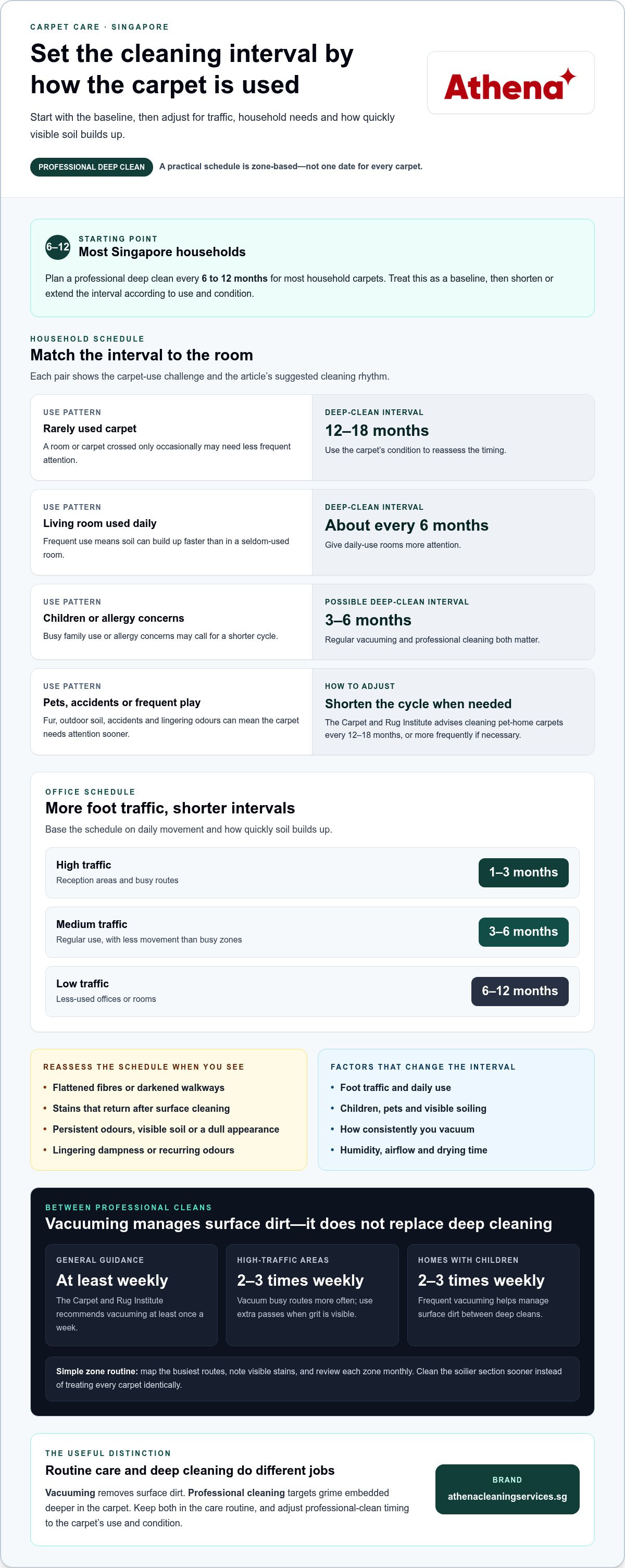
For most Singapore households, plan a professional deep clean every 6 to 12 months. A rarely used carpet may need attention every 12 to 18 months, while a carpet in a living room used daily is usually better cleaned every 6 months. Treat these intervals as a starting point, then adjust for traffic, children, pets, visible soil and how consistently you vacuum.
The Carpet and Rug Institute recommends professionally deep cleaning residential carpets every 12 to 18 months. For carpets in homes with pets, it also advises cleaning every 12 to 18 months, or more frequently if necessary. Singapore guidance can call for shorter intervals in busy homes: carpets used daily with children, or households managing allergy concerns, may benefit from cleaning every 3 to 6 months.
Office schedules depend on how many people cross the carpet and how quickly soil builds up. In Singapore, high-traffic offices generally need professional cleaning every 1-3 months, medium-traffic offices every 3-6 months, and low-traffic offices every 6-12 months. A reception area with constant visitors may need a shorter cycle than a rarely used meeting room.
Regular vacuuming helps manage surface dirt between deep cleans, but it doesn’t replace them. The Carpet and Rug Institute recommends vacuuming at least once a week, with more frequent vacuuming when foot traffic is heavier. In Singapore, high-traffic areas should be vacuumed at least twice a week; homes with children can vacuum carpets 2 to 3 times a week.
Professional carpet cleaning methods include hot-water extraction, which flushes out embedded soil, and low-moisture or dry-compound cleaning, which uses less water and may suit carpets that need quicker drying. The right method depends on the carpet material, the type of soiling and the drying time your space can accommodate.
Some carpet warranties specify professional cleaning every 12-18 months and may require proof for a claim. Review the care instructions supplied with your carpet and keep cleaning records if warranty conditions matter.
Humidity, ventilation, drying time and daily use all affect how often to professionally clean carpets in Singapore. Rooms with limited airflow or recurring dampness need closer attention than dry, lightly used rooms. For households with children or people with allergies, regular vacuuming and professional cleaning both matter. Pet accidents, shedding and frequent play can also mean cleaning sooner.
Cleaning products aren’t automatically suitable for every child, pet or allergy concern. Safety depends on the product, its use and the person or animal’s sensitivity, so follow the product label and keep children and pets away during application and until the carpet is dry.
2. Foot traffic and carpet-cleaning schedules
Foot traffic determines how quickly grit, dust and soil collect in carpet fibres. A home entrance used by everyone daily needs more attention than a spare room crossed occasionally. In Singapore, high-traffic carpet areas are generally considered for professional deep cleaning every 6-12 months. Treat that interval as a zone-based guide, not a reason to clean every room on the same day.
Start by mapping the busiest routes. Common examples include entryways, family rooms, stairs and the path between a sofa and a doorway. Look for flattened fibres, darkened walkways and stains that return after surface cleaning. These signs show where soil is building up, even if nearby carpet still looks fresh.
For a practical home schedule, group carpeted rooms by how often they’re used. A living room used daily needs more frequent attention than a guest room opened occasionally. Keep a simple calendar by room, and bring forward a professional clean if visible soiling builds up before the planned date.
Vacuuming helps control what foot traffic leaves behind. High-traffic areas should be vacuumed at least 2-3 times per week, with extra passes over entrance paths when grit is visible. Use slow, overlapping strokes rather than rushing across the surface. Empty or replace the vacuum bag when it reaches one-half to two-thirds full, as advised by the Carpet and Rug Institute.
Offices need schedules based on daily movement, not just floor area. In Singapore, high-traffic offices generally need professional carpet cleaning every 1-3 months; medium-traffic offices every 3-6 months; and low-traffic offices every 6-12 months. A reception zone with a steady stream of visitors may need attention sooner than a back office used by a small team.
Manage moisture as well as soil. Rain carried in on shoes, spills and damp cleaning can leave carpets wet; limited airflow may slow drying in Singapore’s humid conditions. Place entrance mats to catch dirt, address spills promptly, and avoid adding water repeatedly to a stained patch. Lingering dampness or recurring odours are reasons to reassess the room’s care routine.
Review each zone monthly. Note its busiest days, visible stains, and whether vacuuming restores the appearance. If one route soils faster than the rest, schedule that section more frequently instead of deep-cleaning every carpet equally. For a coordinated maintenance plan, explore carpet-care options alongside your regular vacuuming routine.
A Quora answer recommends cleaning high-traffic carpet sections or kilims every three to six months. Treat this as one reference point, then adjust the interval to the carpet’s use and condition.
3. Professional cleaning for homes with pets
Cats and dogs bring fur, outdoor soil and occasional accidents onto carpet surfaces. Regular vacuuming lifts loose hair and visible debris, but it may not remove embedded dirt, lingering odours or residue from spills. In Singapore homes with cats or dogs, professional carpet cleaning every 3 to 6 months can help address pet smells and dirt that vacuuming may not reach.
The Carpet and Rug Institute advises professional cleaning every 12 to 18 months in homes with pets, or more frequently if necessary. The shorter interval may suit pets that shed heavily, scratch at carpet or have repeated accidents. Homes with pets that shed, scratch or have accidents are advised to deep clean carpets every 6-12 months.
Check the areas your pet uses most. A dog’s favourite resting place, a cat’s play area and the route to the door can collect soil faster than the room’s edges. Note recurring odours, visible fur and stains that return after surface cleaning. These clues can help you decide whether to bring forward the next professional clean.
Act promptly after an accident. Blot fresh liquid with a clean absorbent cloth, working from the outside towards the centre to avoid spreading it. Don’t rub, as this can push residue deeper into the fibres. The Carpet and Rug Institute advises against using a steam cleaner on urine spots because heat can set the stain and smell.
Children can add to carpet wear through crawling, play and food spills, especially in shared family areas. A household with children and a dog has an example deep-cleaning schedule of every 6-9 months. Adjust attention to the carpet’s actual use: a playroom used daily may need earlier care than a room pets rarely enter.
Carpets can trap dust, allergens and bacteria, and cleaning can remove some of this material. Regular care can support household comfort and air quality, but vacuuming and professional deep cleaning do different jobs. Vacuum your pet’s favourite resting area regularly, and arrange a deep clean when soil or odours persist beneath the surface.
Keep a simple record of cleaning dates, accident locations and changes in shedding or household routines. Review it every few months, especially after adopting a pet or changing which rooms are accessible. A shorter interval may suit a home where accidents recur or several pets use the same carpet. In a quieter household with one low-shedding pet and little carpet use, let the carpet’s condition guide the timing rather than cleaning every room automatically.
4. Signs carpets need professional cleaning
A carpet can look tidy while particles remain below the surface. Watch for changes in appearance, smell and texture, particularly along walkways or beneath furniture. These signs can help distinguish surface dust from soil that regular vacuuming hasn’t lifted.
Persistent stains are an obvious warning. Treat spots as soon as they appear, because waiting can make them harder to remove. If a mark remains after careful spot-cleaning or reappears as the carpet dries, note its location and cause. Repeated food spills in a dining area, for example, may mean it’s time to reassess that carpet’s cleaning routine.
Lingering odours also deserve attention. A carpet that smells musty after vacuuming, or retains an odour near a pet’s usual resting place, may hold residue below the visible surface. Identify the affected area instead of masking the smell with fragrance. Recurring odours after spills or accidents are a useful prompt to consider a professional deep clean.
Look for dull or darkened patches along busy routes. Compare the carpet near an entryway with a protected section beneath a table. A clear difference in colour or texture can reveal accumulated soil. Flattened fibres on stairs or a family-room path provide another clue. Vacuuming may improve the surface appearance, but embedded grime can remain.
Dust, allergens, pet hair and dander can collect within carpet fibres. If dust quickly returns after vacuuming, or a room feels less fresh despite regular care, inspect the carpet’s busiest areas. Carpet cleaning can remove trapped material, but carpets aren’t the only source of indoor particles. Use these observations to guide maintenance, not to diagnose a health condition.
Make a simple check part of your routine. Walk through the room in daylight, inspect edges and traffic paths, and note stains, odours or visible changes. Compare your observations with your cleaning record and the manufacturer’s care instructions. The recommended schedule varies with use, so a rarely used study won’t necessarily need the same attention as a daily-use living room.
Take action promptly for a fresh spill: blot it with a clean cloth instead of rubbing, which can spread the mark. For persistent stains, recurring smells or visible soil that remains after vacuuming, arrange a professional assessment of the carpet’s condition. Keep a brief record of the affected spots, so the next cleaning focuses on the areas showing the clearest signs.
5. DIY carpet care versus professional cleaning
DIY care and professional cleaning address different carpet problems. Vacuuming removes loose surface soil, while professional cleaning targets embedded dirt, stains and bacteria. A carpet can look better after vacuuming yet still hold grime deeper in its fibres. Use both as parts of one routine rather than treating either as a substitute for the other.
Between professional cleans, vacuum carpets at least once a week, as the Carpet and Rug Institute recommends. Vacuum more often where foot traffic is heavier, such as along an entrance route or in a family room. Move furniture when practical so dust doesn’t collect unnoticed at the edges, and empty or replace the vacuum bag when it’s one-half to two-thirds full.
Treat fresh spots promptly. Blot a spill with a clean cloth rather than rubbing it across the fibres, then follow the carpet maker’s care instructions. This can help limit how far a stain spreads. Avoid applying an untested cleaner, as carpet materials and cleaning products differ.
For washable rugs, check the label before using a washing machine. The Carpet and Rug Institute recommends warm water at 90 to 105 degrees for machine-washable rugs, while following the rug’s instructions. A rug that isn’t labelled washable needs a different care approach; don’t assume every carpet or rug can tolerate the same method.
Prevention is part of home care. Place mats near entrances to catch soil before it reaches the carpet, and leave shoes at the door where practical. In homes with pets, clear visible fur and blot accidents promptly. These steps help protect the carpet between deep cleans, but they don’t extract embedded dirt or address persistent odours as thoroughly as professional equipment.
Choose professional cleaning when stains remain after careful spot treatment, odours return or vacuuming no longer refreshes a visibly soiled area. It can also help before a tenancy handover or after heavy use. The right method depends on the carpet material, the type of soil and how much moisture the fibres can tolerate.
Build a practical routine: vacuum regularly, treat spots as they appear, and note changes in colour, smell or texture. Then schedule a deep clean based on the carpet’s use and condition. Keep the manufacturer’s care guidance nearby, especially if warranty terms require specific maintenance or proof of cleaning.
For carpets that need more than routine home care, arrange a professional carpet clean as the next step in your maintenance plan.
Athena Team Cleaning: Office Cleaning
Athena Team Cleaning provides Office Cleaning for workplaces that need a consistent approach to maintaining shared spaces. For carpeted offices, professional carpet cleaning complements routine vacuuming, especially in reception areas, meeting rooms and other busy zones where soil and stains build up.
Turn to Athena Team Cleaning when office carpets need more than day-to-day care, or include Carpet and Rug Cleaning in a broader workplace maintenance plan. Building Maintenance and Sanitization Services can also support work environment upkeep. The right routine depends on how each space is used and the condition of its carpets.
For Office Cleaning or Carpet and Rug Cleaning for your workplace, WhatsApp for a quick quote from Athena Team Cleaning.
Make your next carpet-care step count
A lasting routine starts with a clear picture of how each space is used. Keep a simple record of carpet condition, recurring spills and changes in household or workplace activity. This turns the question of how often to professionally clean carpets into a practical maintenance decision, rather than a date chosen by habit.
For homes and workplaces in Singapore, Athena Team Cleaning offers Carpet and Rug Cleaning, alongside Office Cleaning and Building Maintenance. These services can support a more coordinated approach when carpets are part of a broader cleaning or upkeep plan. The best next step depends on the carpet’s condition, its use and the maintenance support you need.
Bring your observations together, identify the areas needing attention, and choose a routine you can maintain. Contact Athena Team Cleaning to discuss carpet cleaning or workplace cleaning needs. A considered plan can help keep your space welcoming and well cared for.
Frequently Asked Questions
How often should you deep clean your carpet?
For most Singapore households, schedule a professional deep clean every 6 to 12 months. To decide how often to professionally clean carpets, consider how often each room is used, not just the carpet’s overall appearance. For example, set a shorter interval for a daily-use lounge and a longer one for a seldom-used spare room. A room-by-room calendar makes it easier to adjust without cleaning every carpet at the same time.
How often should carpets be professionally cleaned in a typical home?
A typical Singapore home can use the 6 to 12 month interval as a planning guide. A single-person household with lightly used carpet may stay closer to the longer end, while a shared living space used daily may need attention sooner. Keep the carpet’s care instructions with your household maintenance notes, especially if the manufacturer sets cleaning conditions that affect warranty coverage.
How often should carpets be professionally cleaned in homes with pets or children?
Homes with pets or children may need professional cleaning every 3 to 6 months, particularly where carpets see daily play or repeated spills. For a family with two children and a dog, an example schedule is every 6-9 months. Keep track of which rooms pets and children use most, then prioritise those carpets if accidents, visible soil or odours recur before the next planned clean.
How often should carpets be professionally cleaned in high-traffic areas?
Consider professional deep cleaning high-traffic home areas every 6-12 months, and high-traffic office carpets every 1-3 months. Entry routes, reception areas and stairs often collect soil faster than quieter rooms. Rather than treating every carpet alike, note which sections show wear first and plan cleaning around those zones. Regular vacuuming between visits helps manage surface dirt, but doesn’t replace a deep clean.
What are the signs that a carpet needs professional cleaning?
Persistent odours, stains that remain after spot treatment, and darkened or flattened walkways are practical warning signs. Check the carpet in daylight after vacuuming, then compare a busy route with a protected section beneath furniture. If the difference remains obvious or a smell returns after airing the room, reassess the cleaning schedule. Blot fresh spills promptly, as waiting can make stains harder to remove.
Frequently Asked Questions
How often should you deep clean your carpet?
How often should carpets be professionally cleaned in a typical home?
How often should carpets be professionally cleaned in homes with pets or children?
How often should carpets be professionally cleaned in high-traffic areas?
What are the signs that a carpet needs professional cleaning?
Related articles